
College Pickup Basketball App Example
April 14, 2026
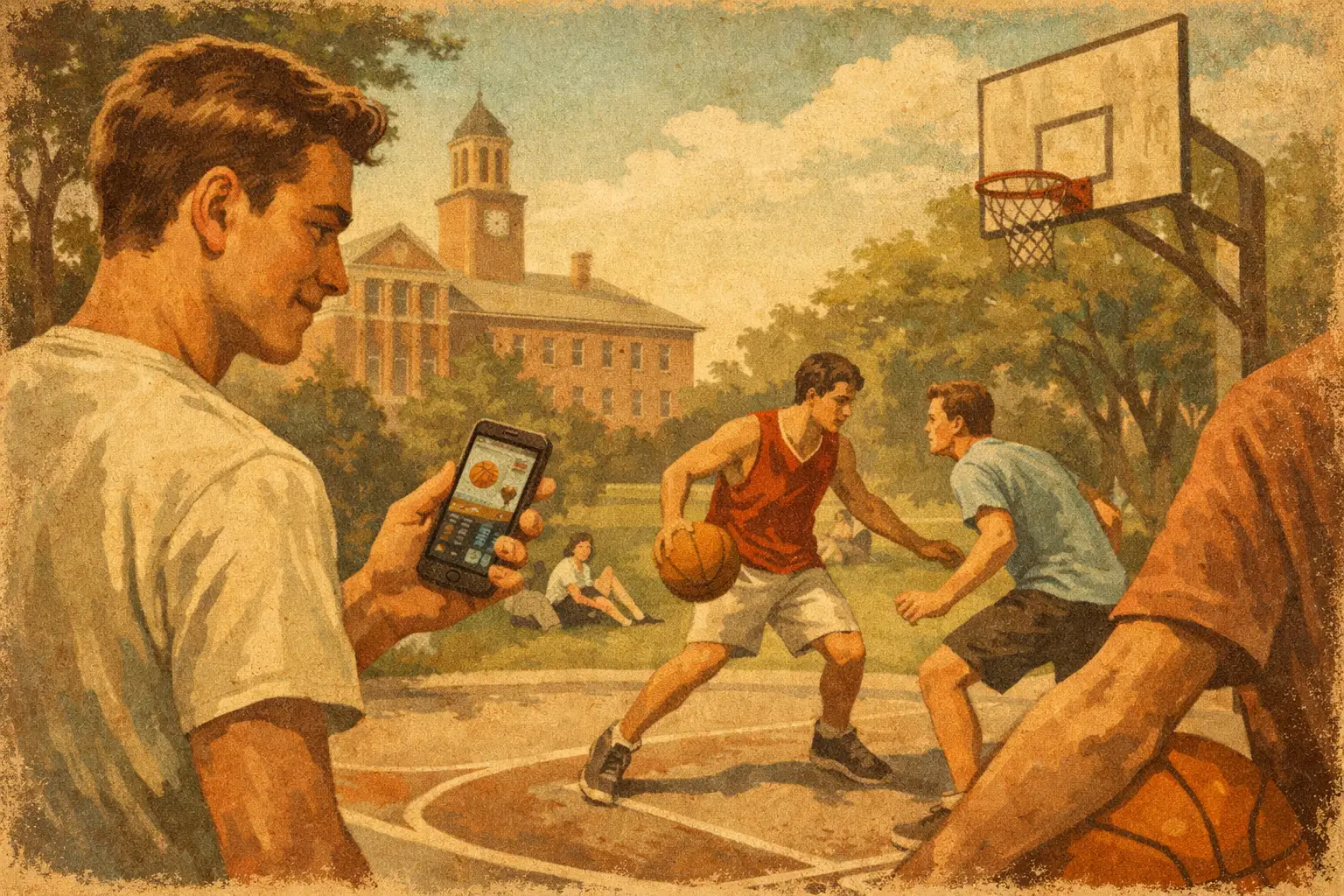
Walk onto almost any college campus at 6 p.m. and you’ll see the same problem: one gym is packed, one run is half-full, and a bunch of players are texting five different group chats trying to figure out where the real game is. That is exactly why a college pickup basketball app example matters. It turns scattered demand into organized play, and on a campus, that changes everything fast.
This isn’t just about posting a game time. A good campus basketball app has to solve timing, trust, skill balance, and court access all at once. If it only does one of those well, students will try it once and go right back to Instagram stories, text threads, and "pull up if you can" chaos.
What a college pickup basketball app example needs to solve
College players move fast. Schedules change by the hour, friend groups overlap, and pickup culture depends on momentum. If a game organizer has to manually confirm ten people, explain where to park, and guess whether the run will be competitive or casual, the experience breaks before the first tip.
A strong college pickup basketball app example starts with one core job: helping someone say "I want to hoop tonight" and turning that into an actual game with the right people in the right place. That sounds simple, but campus environments add extra friction. Some courts are open only to students. Some rec centers require ID check-in. Outdoor courts may be public, but they depend on weather, lighting, and neighborhood traffic.
The app also has to respect how students actually decide to play. Most players do not want a long signup flow. They want to know four things quickly: where the game is, when it starts, who is going, and what kind of run it is. Full-court serious run? Beginner-friendly half-court? Women’s run? Freshmen only? Club team players? Those details shape turnout.
The simplest version that still works
If you were building a first version, keep it tight. Students do not need twenty tabs. They need confidence that showing up will be worth it.
Core feature 1: Venue-based game discovery
The home screen should open to nearby courts, both indoor and outdoor, with live status around upcoming runs. That means campus rec centers, dorm courts, outdoor blacktops, and partner gyms if the school allows them. Players should be able to filter by distance, time, indoor or outdoor, and game type.
This is the difference between a useful app and a glorified message board. A campus player is often deciding between three options in under two minutes. Show the court, show the crowd, show the level, and let them commit.
Core feature 2: Event creation in under 30 seconds
Creating a run should feel almost frictionless. Pick a court, select start time, set player count, choose competitive level, and add a short note. That’s enough to get momentum.
Anything more can wait until later. If your product asks for team names, custom rules, payment setup, and profile verification before a student can post "4v4 at north rec, starts at 7," you’re losing the room.
Core feature 3: Join status that means something
Campus pickup falls apart when attendance is fake. A player taps "in" and never shows. Someone else brings three friends. The court gets double-booked socially even when it isn’t booked officially.
A better system uses simple participation signals. Joined, maybe, checked in, and completed. Over time, players build a reliability score based on actual attendance, not just intentions. That matters more than most app founders think. On campus, trust is a growth loop.
Why stats and ratings matter more than people expect
A lot of founders think pickup basketball should stay loose and untracked because that feels authentic. Sometimes that’s true. But on a college campus, progress is social. People want to get better, get recognized, and find runs that match their level.
A lightweight stat layer keeps people coming back
You do not need full play-by-play for pickup. Simple post-game stat entry works for most runs: points, wins, rebounds, assists, and maybe streaks. Add trophies for consistency, event hosting, and sportsmanship, and suddenly the app is not just where games are posted. It becomes part of a player’s identity on campus.
That matters because retention in sports apps usually comes from rhythm. If players can see they’ve joined eight runs this month, improved their win rate, and earned a badge for organizing games, they have a reason to open the app before they need it.
Ratings need guardrails
Player ratings can help with game quality, but they can also turn weird fast. If ratings become popularity contests, the product starts excluding newer players or anyone outside the dominant friend groups.
The smart move is to rate useful things instead of vague talent alone. Reliability. Sportsmanship. Competitiveness. Communication. That gives organizers better signals while keeping the culture open. College pickup should feel like a ladder people can join, not a private club hidden inside an app.
The social layer is the real engine
Here’s where many products miss the mark: they treat pickup basketball like scheduling software. But students are not trying to manage meetings. They’re trying to find their crew.
A college pickup basketball app example gets stronger when it lets players build around recurring relationships. That means direct challenges, friend lists, team formation, and repeat groups that can grow into leagues or regular weekly runs.
One player might want a Friday night open run. Another wants to challenge the dorm across campus. Another wants to build a team from chemistry lab, club soccer, and two former high school guards who still have something to prove. The best app supports all of those paths without making them feel like separate products.
This is also where multi-sport thinking gets interesting. A basketball player is often also playing soccer, lifting, running, or joining random rec events with friends. Platforms that understand that behavior can create stronger community loops than single-sport tools. One profile, one social graph, more ways to show up.
What makes this work on a real campus
There’s a difference between a cool demo and a campus product students actually use for a semester.
It has to fit campus logistics
If the app ignores rec center rules, it becomes unreliable. Students need to know whether a court is open, whether access is public or student-only, and whether there are enough players confirmed to make the trip worth it. Even basic status indicators can reduce friction: open gym, likely full, weather risk, lights available, checked-in players.
It has to reward organizers
Campus communities always have a few people doing most of the work. They create the runs, message everyone, settle disputes, and keep games alive during midterms. If the app does not recognize those people, they burn out.
Reward hosting. Reward consistency. Reward verified game completion. That can be social recognition, leaderboard placement, in-app achievements, or early access to new features. If we want better sports communities, we have to make organizing feel worth it.
It has to stay open to beginners
Not every student showing up at the gym played varsity. Some are learning. Some are returning after years away. Some just transferred and know nobody. If your app only serves the most competitive players, you cap growth early.
Skill tags, beginner-friendly events, and clearer event descriptions help keep the door open. The strongest campus sports products don’t just organize the best players. They grow participation.
A realistic product flow
Imagine a sophomore finishes class at 4:20. He opens the app and sees three runs within a mile. One is indoor at the rec center with eight confirmed players and a competitive tag. One is outdoor and casual, but weather is shaky. One is women-only at 7:30.
He joins the indoor run, sees that two friends are already in, and gets a reminder to check in when he arrives. After the games, players confirm attendance, log basic stats, and rate sportsmanship. The organizer earns a hosting trophy because the event filled and completed. Next week, the app suggests a rematch between the top two players from that run.
That’s not overbuilt. That’s useful. It turns pickup from random chance into repeatable community.
Where a broader sports network can win
This is one reason a platform like Crewters has an interesting angle if it stays focused on real participation. College basketball might be the entry point, but students do not live in one-sport silos. They move between courts, friend groups, teams, and challenges. A product that connects venues, events, teams, stats, and progression across sports can feel more alive than a single-use basketball scheduler.
The trade-off is focus. If the product tries to do everything on day one, it gets messy. But if it builds one campus behavior loop well - find a game, join fast, show up, get recognized, come back - then the broader network starts to make sense.
A great college pickup basketball app example is not defined by flashy design or a giant feature list. It wins because students trust it to turn free time into a real run with real people. Build that loop first, keep the community visible, and let players help shape what comes next. That’s how you make sports apps fun again.