
What a Sports App With Venues Should Do
March 13, 2026 · Chris Palmer
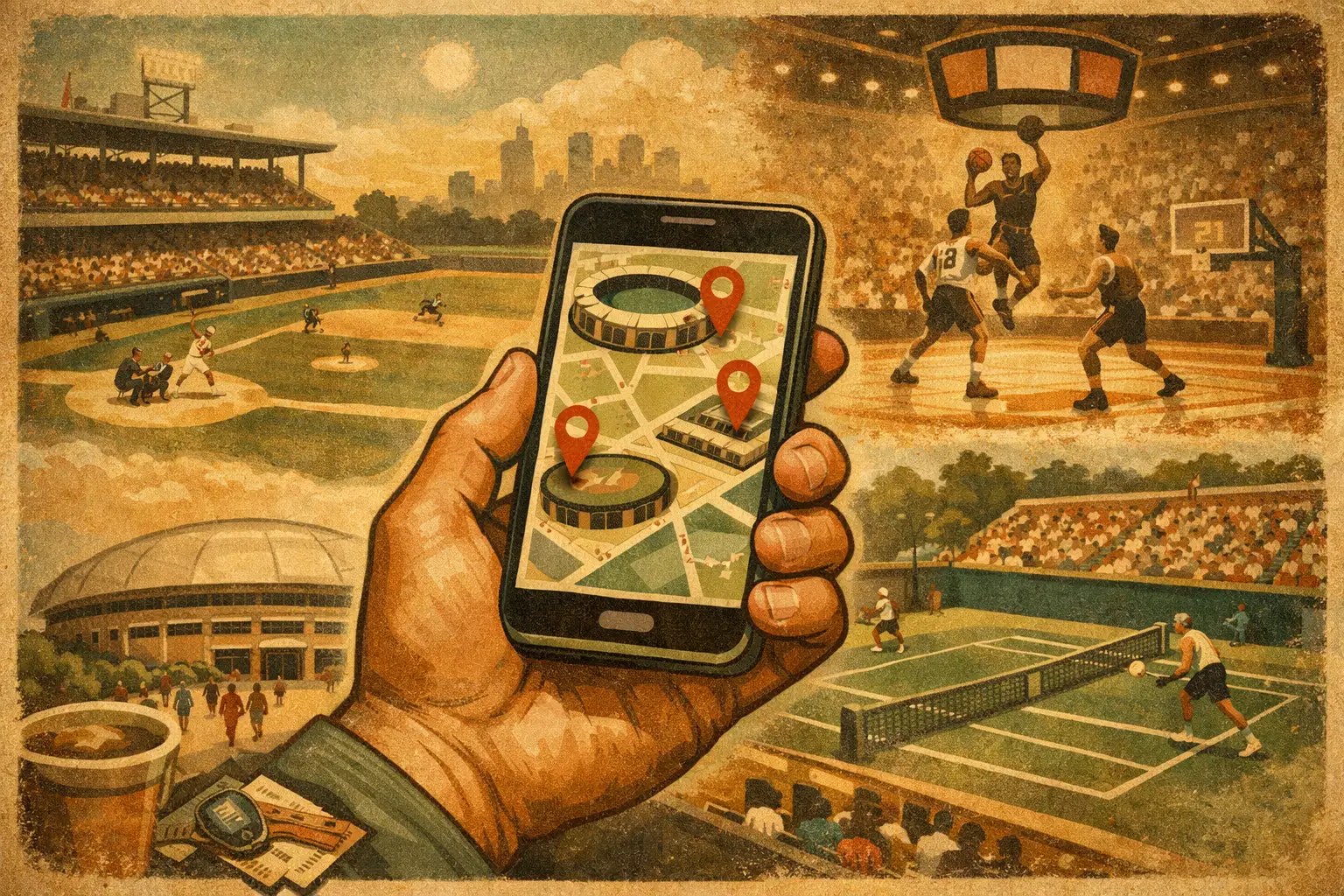
You open an app because you want to play tonight, not because you want to spend 20 minutes piecing together a plan across maps, group chats, and three different booking tools. That gap between intent and action is where most sports products still fall short.
A good sports app with venues should close that gap fast. It should help you find a place to play, see who is active nearby, join a game that fits your level, and keep the momentum going after the final whistle. If it only shows locations, it is a directory. If it only helps you chat, it is a social feed. Players need both.
Why a sports app with venues matters
Venues are where sports communities become real. Courts, fields, gyms, tracks, pools, and studios are not just pins on a map. They are repeat meeting points, skill-building environments, and the places where routines stick.
That matters whether you play three times a week or you are trying to get back into sports after a long break. A venue gives structure. Once an app ties that structure to discovery, scheduling, competition, and accountability, it becomes far more useful than a one-off finder tool.
For casual players, that means less friction. You can stop asking, "Where do people actually play around here?" For organizers, it means fewer no-shows and better visibility into who is coming. For travelers, it means you can land in a new city and still find your sport without starting from zero.
The catch is that venue data alone is not enough. A park might look great on a map and still be dead on a Tuesday night. A court might be technically available but impossible to use without local context. The best apps connect places to real activity.
What users actually need from a sports app with venues
The first job is obvious - show venues clearly and make them easy to search. But after that, the details matter more than most apps admit.
Users want to know what kind of sports a venue supports, whether the place is active, and what usually happens there. Is it pickup basketball on weekday evenings? Competitive tennis on weekends? Open soccer runs with mixed skill levels? Context beats raw listings every time.
They also need flexible discovery. Some people search by sport first, then location. Others start with whatever is nearby and decide based on what is happening. A strong product supports both behaviors because real life is messy. Sometimes you are planning your week. Sometimes you just got off work and want a game within 15 minutes.
Then comes the social layer. Once a venue is connected to events, players, teams, and challenges, the app starts solving the real problem. You are no longer just finding a court. You are finding a reason to show up.
Venue discovery is only step one
A lot of products stop at searchable maps and basic venue pages. That is helpful, but it is not enough to build habit.
Habit comes from activity. When users can create pickup games at a venue, join sessions that already have momentum, or challenge someone directly, the venue becomes a live node in a sports network. That changes the value of the app. It moves from passive browsing to active participation.
This is also where all-sports platforms have an edge. People do not live in single-sport silos as much as many apps assume. Someone might play basketball regularly, join a weekend soccer run, and try padel or pickleball when friends invite them. An app that supports multiple sports in one place reflects how people actually move.
That matters even more in cities and on college campuses, where sports culture is fluid and schedules change fast. If every activity lives in a separate app, users burn out. If one platform can connect venues, people, and organized play across sports, it becomes part of the weekly routine.
The best experience connects venues to action
The strongest sports products do not treat venue pages like dead ends. They turn them into launch points.
A player should be able to open a venue and immediately see what is next: upcoming events, local players, recent reviews, active teams, and the level of competition they can expect. That creates confidence. It lowers the social cost of joining.
This matters a lot for newer players. Experienced athletes will often tolerate uncertainty because they already know the culture of their sport. Newcomers usually will not. If an app makes a venue feel approachable by showing beginner-friendly sessions, organized teams, or clear ratings, more people cross the line from interested to active.
For competitive users, action means something slightly different. They want progression. They want stats, history, rivalries, and proof that the reps are adding up. A venue-linked app becomes much more compelling when it tracks what happens there over time. Not just where you played, but how you performed, who you faced, and what you are building toward.
Community makes venue data useful
The reason many venue products feel flat is simple: static information gets stale. Community keeps it alive.
When players rate venues, review opponents, stream events, post results, and shape what features get built next, the app starts improving from the ground up. You get a living network instead of a frozen database.
That builder mentality matters in sports tech right now. Users are tired of tools that feel finished before they are useful. They want to be early. They want to influence the product. They want to say, "We need better event filters," or, "Add more support for niche sports," and see that feedback turn into roadmap movement.
That is one reason the category is shifting. The next generation of sports apps will not win by offering one polished utility. They will win by creating an active loop between venues, play, competition, and user input.
What to watch for if you are choosing one
If you are looking for a sports app with venues, start by asking whether the app helps you do more than browse. Can you create a game at a venue in seconds? Can you join one without awkward back-and-forth? Can you see who plays there and what level they are? Can you carry your progress, stats, and community with you from one place to the next?
Also look at sport coverage. A single-sport app can be great if your world stays inside that one lane. But if you want flexibility, travel often, or like mixing competitive and casual play, broader support usually wins. It is easier to stay engaged when the platform grows with your interests instead of boxing you in.
There are trade-offs, of course. A niche app may offer deeper tools for one sport. A broad network may offer stronger discovery and more social overlap. It depends on what you want most: specialized features or a bigger playing ecosystem.
For many players, the sweet spot is a platform that combines both ambition and participation - broad enough to support real life, focused enough to make each sport feel playable right now.
Where this category is headed
The future of the sports app with venues category is not just better search. It is better coordination and better motivation.
That means venue discovery tied directly to pickup events, structured leagues, direct challenges, team formation, and visible progression. It means support for mainstream sports and niche ones, because local communities are more diverse than old app categories suggest. It means giving users reasons to come back even when they are not currently booking anything.
It also means making sports apps fun again. Not sterile. Not just functional. Fun. Trophies, achievements, ratings, rivalries, and community recognition all matter because sports are emotional. People want to feel momentum, not just utility.
That is the opportunity. Build something that helps people find a place to play, then keep building until that same product helps them find their crew, raise their level, and stay in the game. That is the lane we are building toward at Crewters, and it is why community input matters so much to what comes next.
If your app starts with venues, make sure it does not stop there. The best sports experiences begin with a location, but they only stick when people, competition, and progress show up too.