
What a Good Multi-Sport App Should Do
March 10, 2026 · Chris Palmer
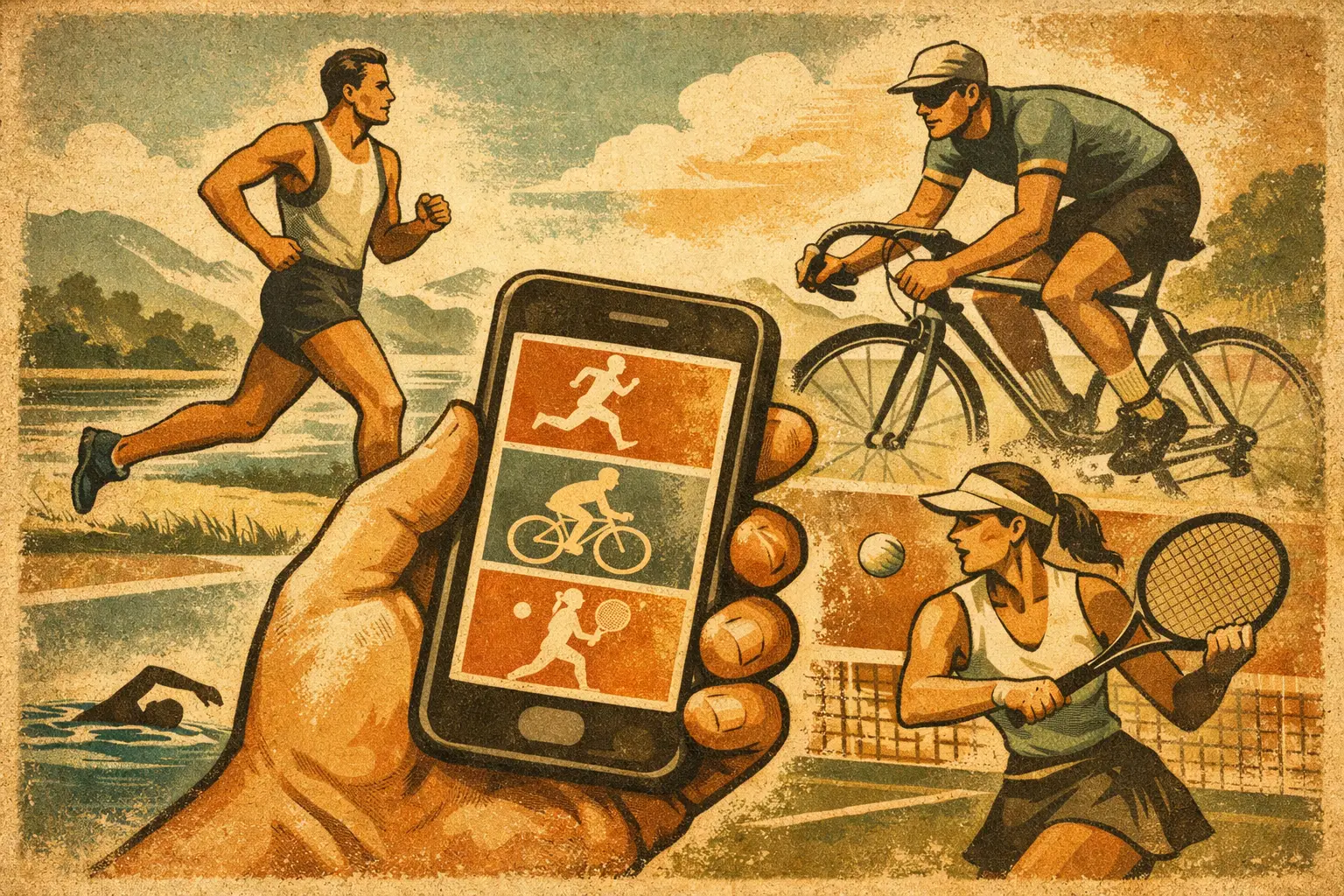
Most sports apps break the moment your life gets real.
You play basketball on Tuesdays, tennis when courts open up, soccer when your group chat finally agrees on a time, and maybe pickleball because your coworkers won’t stop asking. Suddenly you need one app for leagues, another for pickup, another for venue info, and a fourth for messaging people who may or may not show up.
That mess is exactly why the idea of a multi-sport app matters.
Not because combining sports into one place sounds nice on a pitch deck, but because real players do not live in neat little single-sport boxes. People switch sports by season, by friend group, by city, by schedule, and by skill level. A useful product should match that reality.
Why a multi-sport app makes more sense now
The old model assumed your sports identity was fixed. You were a basketball player or a tennis player or a runner, and your digital tools followed that lane. That worked if you had one routine, one venue, and one circle.
That is not how a lot of people play anymore.
Students bounce between intramurals, open gyms, and casual runs. Young professionals want flexible games after work, not a six-month commitment every time they want to compete. Travelers need to find a court, field, or training partner fast in a city they do not know. And newer players often want lower-pressure entry points before they join a formal league.
A strong multi-sport app solves for all of that by treating sports participation as a network, not a set of isolated transactions. The value is not just that it supports many sports. The value is that it helps you move from intent to action faster, whether you are looking for a team, a place to play, or a last-minute game tonight.
What players actually need from a multi-sport app
The biggest mistake in this category is thinking the job is just listing sports. It is not. A multi-sport app only works if it reduces friction.
First, it should help you find places to play. That sounds basic, but venue discovery is where a lot of momentum dies. If you cannot quickly find nearby courts, fields, gyms, or community spaces, nothing else matters. Good venue information creates confidence. You know where to go, what sport is played there, and whether it fits your level or format.
Second, it should make organizing feel light. Creating an event should not feel like managing a spreadsheet. Joining should not require ten back-and-forth messages. If the app cannot help you set a game, fill spots, and get people on the same page, it is adding work instead of removing it.
Third, it should support different ways to compete. Not everyone wants the same thing. Some players want pickup. Some want direct challenges. Some want teams and standings. Some want recurring leagues. A good product respects that sports participation is layered. Casual and competitive players often live in the same ecosystem, just at different moments.
That matters even more in a multi-sport environment because your behavior changes by sport. You might want serious stat tracking in basketball, casual doubles coordination in tennis, and a beginner-friendly drop-in experience for something new. One rigid system will not fit every sport equally well.
The best multi-sport app experience feels social first
People do not keep playing because software is tidy. They keep playing because sports are social.
That is why the strongest multi-sport app is not just a scheduler with a nicer interface. It is a place where community actually forms. You should be able to see who plays near you, who is hosting, who is reliable, and who you want to compete with again.
This is where many sports products miss the bigger opportunity. They focus on logistics and ignore identity. But players care about reputation, consistency, progress, and belonging. If you play often, you want your activity to build into something. You want your games to count for more than a calendar entry.
Features like player ratings, post-game reviews, achievements, and visible participation history can help here, but only if they are handled carefully. Done well, they create accountability and motivation. Done poorly, they make casual users feel judged or boxed out.
That trade-off matters. Competitive energy is good. Gatekeeping is not. A smart product needs to reward commitment without making newcomers feel like they need a resume to join a Tuesday game.
Why stats and progression keep people engaged
A lot of sports apps stop at coordination. That gets people in the door, but it does not always bring them back.
Progression changes that.
When players can track stats, set goals, earn trophies, and see improvement over time, the app becomes part of the sports habit itself. You are not only using it to find games. You are using it to measure momentum.
This is especially useful in a multi-sport setting because improvement does not always look the same across activities. In one sport, you may care about wins. In another, you may care about consistency, attendance, skill milestones, or simply showing up more often. A flexible progression system is better than a one-size-fits-all scoreboard.
There is also a motivational angle that should not be ignored. Many players need a little extra push between wanting to play and actually committing. Visible streaks, achievements, and shared milestones can create that push. They make participation feel earned and public in a good way.
A multi-sport app should work for beginners too
This category can get too focused on highly active athletes and miss a huge group of people who want in but do not know where to start.
That is a problem because sports growth depends on low-friction entry.
Beginners need simple ways to find open events, friendly opponents, and teams that are not closed off. They need to understand what level a game is, what to expect, and whether they are actually welcome. If a multi-sport app only serves established circles, it will feel exclusive fast.
This is where product design matters as much as features. Clear event types, approachable skill indicators, and straightforward join flows can make a big difference. So can community norms that favor participation over posturing.
The upside is huge. A person who starts with one beginner-friendly sport may become active across several. That is where the multi-sport model becomes powerful. It does not just support current habits. It helps create new ones.
What separates a real platform from another utility
A lot of apps can help you book, browse, or message. Fewer can create network effects.
A real platform gets stronger as more players, organizers, and venues participate. More venues mean better discovery. More players mean faster game formation. More teams and organizers mean more structure for people who want it. More activity means more trust signals, better matchmaking, and more reasons to return.
That is why all-sports matters. If communities stay fragmented by sport, each one grows slower. If they can live in one ecosystem, users have more ways to participate and more reasons to stick around.
This is also why building in public makes sense for a product like this. The best version of a multi-sport app is not invented in a vacuum. It gets shaped by players, organizers, and early adopters who actually use it every week. If people can test features, vote on priorities, and help shape what comes next, the product becomes more than software. It becomes shared infrastructure for local sports.
That is the bet behind Crewters at https://crewters.com - one place for 122 sports, with venues, events, challenges, teams, leagues, stats, trophies, and a community that helps decide what gets built next.
The hard part is balance
A multi-sport app can become too broad if it tries to do everything equally for everyone from day one. Different sports have different rhythms, formats, and expectations. Basketball pickup culture is not the same as tennis ladders. Soccer team management is not the same as drop-in volleyball.
So the goal is not flattening every sport into the same template. The goal is building a shared system that still leaves room for sport-specific behavior.
That balance is difficult, but it is worth getting right. Too generic, and the product feels shallow. Too specialized, and it loses the cross-sport advantage that makes it useful in the first place.
The apps that win here will be the ones that stay practical. Help people find a place. Help them find a crew. Help them set a game. Help them track what matters. Then keep improving with the community, not around it.
If a sports app can make showing up easier and make playing feel more connected, it stops being just another download. It becomes part of how your week gets built.