
Tennis Challenge Ladder App Example That Works
April 29, 2026
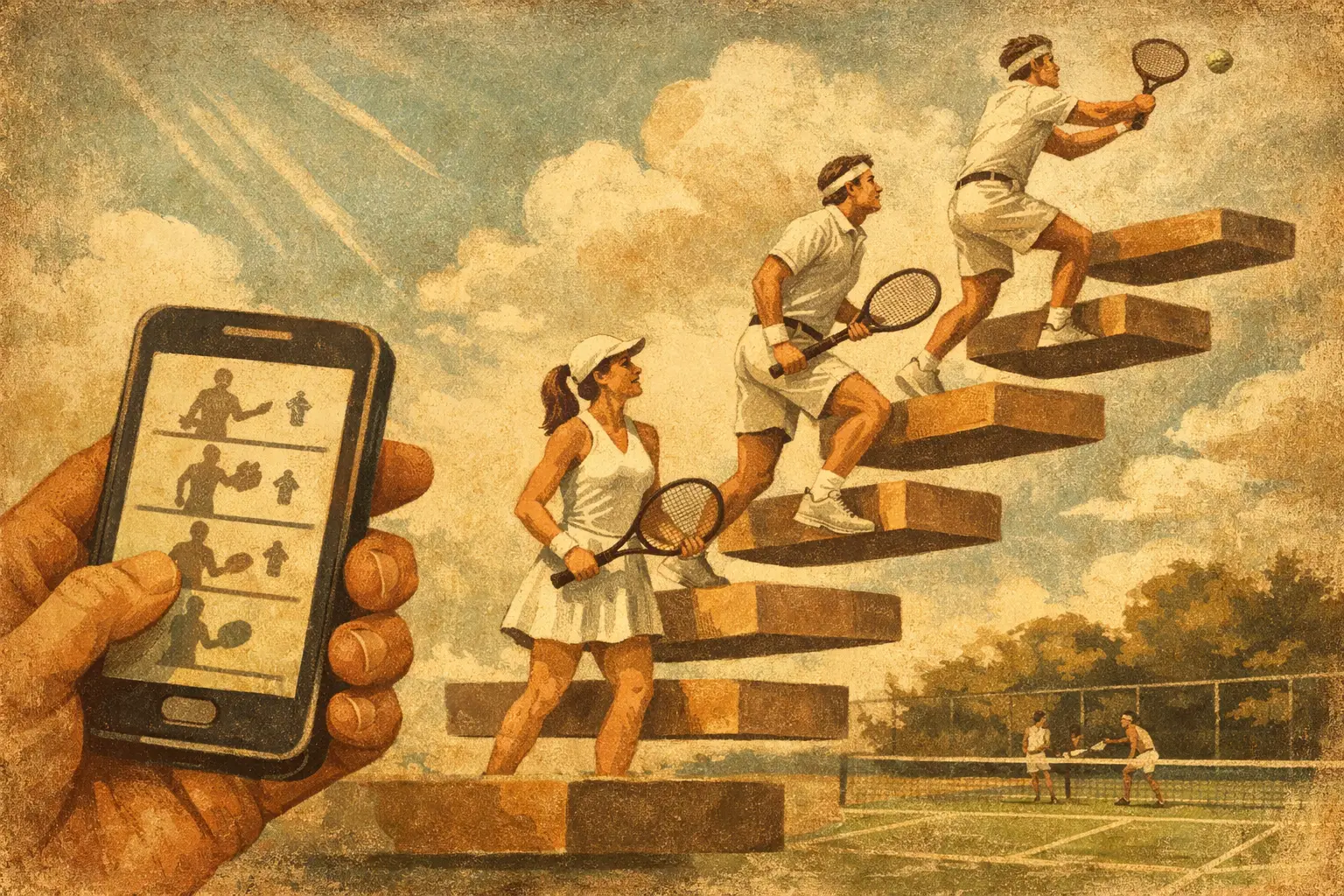
Most tennis ladders fail in the same boring way: the ranking looks good on paper, but nobody actually schedules the match. That is why a strong tennis challenge ladder app example matters. If the app only tracks position and ignores player behavior, availability, venues, no-shows, and motivation, the ladder turns into a static list instead of a living local competition.
The better model is simple to understand but harder to build well. A ladder app has to create pressure to play without making the experience feel like admin. It needs enough structure to keep things fair and enough flexibility to work for college players, club regulars, weekend hitters, and people who just want one competitive match a week.
What a good tennis challenge ladder app example actually includes
A useful ladder app starts with the challenge flow, not the leaderboard. Rankings are the reward, but challenges are the engine. A player should be able to see who is above them, send a challenge in a few taps, suggest times, pick a court, and get a clear deadline for match completion.
That sounds obvious, but this is where many ladder tools get clunky. If players have to jump between text threads, notes apps, and court booking systems, momentum disappears. The best experience keeps the challenge, response, scheduling, score reporting, and standings update in one place.
A solid tennis challenge ladder app example would include player cards with skill signals, match history, response rate, and maybe even reliability indicators. Not every player who signs up actually shows up. In a community ladder, that matters just as much as a backhand.
The ladder rules need to be strict in the right places
The hardest part of any ladder is fairness. Too rigid, and people stop participating because the rules feel like homework. Too loose, and the rankings become meaningless.
A good ladder app solves this by being strict about challenge windows and score validation, while staying flexible on scheduling details. For example, you might allow players to challenge anyone up to three spots above them. Once the challenge is accepted, both players have seven days to complete the match. If the match is not played, the app needs a clear path for reporting what happened.
This is where smart status options matter. "Completed," "opponent declined," "no response," "weather issue," and "reschedule requested" are more useful than a generic cancellation button. They create accountability without forcing organizers to referee every dispute manually.
The trade-off is that more rules can mean more friction. That is why the app has to make compliance feel automatic. Deadlines, reminders, and eligibility rules should be built into the flow instead of hidden in a PDF nobody reads.
A tennis challenge ladder app example should solve scheduling first
For most local tennis communities, scheduling is the real product. The rankings are what attract players, but scheduling is what keeps them engaged. If two players want to compete and still cannot find a court and a time, the ladder breaks.
That means the app should support availability sharing, venue selection, and simple confirmation. Ideally, players can propose multiple time slots and tie a match to a specific local court. Even better if the app knows where people usually play and can surface nearby venues without extra searching.
This matters even more for players who travel or split time between neighborhoods. A ladder tied too tightly to one club can exclude people who are otherwise active and competitive. On the other hand, a ladder with no venue logic can become chaos. It depends on the community. A college campus ladder, public-park ladder, and private-club ladder all need slightly different settings.
Rankings should motivate play, not just reward winning
Traditional ladders often overvalue inactivity. A strong player can sit near the top and avoid risk. That is bad for participation and worse for community energy.
A better system gives players reasons to stay active. Yes, wins should matter. But so should challenge acceptance, recent match activity, and maybe even streaks or achievements that recognize consistency. If your app wants to build real competition, it cannot only celebrate the final score. It should also reward people for keeping the ladder alive.
This is where gamification actually helps instead of feeling gimmicky. Trophies for completed match streaks, badges for challenging up successfully, and visible stats like win percentage or most active player can push participation in the right direction. The key is balance. Too many game layers and the tennis starts to feel secondary. Too few and the app becomes just another scheduling board.
The social layer is not extra - it is the retention loop
A ladder app that treats players like anonymous usernames will always feel thin. Tennis is social, even when it is competitive. People come back because they want better matches, local recognition, and a sense of progress inside a real community.
That is why profiles, ratings, post-match feedback, and visible community activity can make a huge difference. If players can see who is active, who plays at their level, and who reliably responds to challenges, they are more likely to trust the ladder and stick with it.
This is also where an app can go beyond tennis without losing focus. A sports network approach lets users stay engaged across pickup play, direct challenges, teams, leagues, and venue discovery instead of living inside one isolated feature. That broader ecosystem can make a tennis ladder stronger because it keeps the player connected to the larger sports community, not just one ranking table.
What organizers need from a tennis challenge ladder app example
Players are only half the story. Organizers need controls that reduce manual cleanup. If they are still chasing scores in group chats and settling disputes by screenshot, the app is not doing enough.
Organizer tools should include ladder creation, challenge rule settings, season windows, dispute review, inactive-player handling, and easy ways to remove or pause members. There should also be visibility into metrics that matter: how many challenges were issued, how many were completed, average response time, and where the drop-off happens.
That data matters because not every ladder problem is a player problem. Sometimes the challenge range is too narrow. Sometimes the completion window is too short. Sometimes there are not enough convenient courts. Good software helps organizers spot the real bottleneck.
The best example is one players can understand in seconds
Here is the simplest useful flow. A player joins a local tennis ladder, sees they can challenge up to three spots above, taps an opponent, proposes two times at a nearby court, and sends the challenge. The opponent accepts, both get reminders, they play, submit the score, and the standings update automatically. If one player does not respond in time, the app records that outcome and keeps the ladder moving.
That is the baseline. From there, better products add stats, achievements, venue context, player ratings, and stronger community features. But if the core challenge loop is not fast and clear, none of the extras matter.
One reason this model fits modern rec sports is that players want structure without bureaucracy. They want competition they can access from their phone, with enough accountability to make matches happen. That is exactly why apps built around challenges, organized play, and visible progression are gaining traction. Platforms like Crewters are interesting in that mix because they are not treating sports users like passive consumers - they are building around participation, community feedback, and repeat play.
What to watch out for before you build or join one
Not every ladder app should look the same. A beginner-friendly community may need softer matchmaking and fewer penalties. A serious competitive group may want tighter enforcement, verified scores, and smaller challenge ranges. The right setup depends on whether your goal is access, development, rivalry, or all three.
It is also worth being honest about friction. Score disputes will happen. Some players will game inactivity rules. Some communities are large enough to support multiple divisions, while others need one flexible ladder just to maintain volume. The app should not pretend these trade-offs disappear. It should give the community tools to handle them.
The best tennis ladder products feel alive because they reflect how people actually organize sports. They make it easy to challenge, easy to schedule, easy to report, and worth coming back. If you are looking for a tennis challenge ladder app example, that is the standard to use: not a pretty leaderboard, but a system that gets more matches played, more often, by more people who want to compete.
Build for activity first, and the rankings will mean something.