
What an All Sports Social Network App Should Do
April 21, 2026
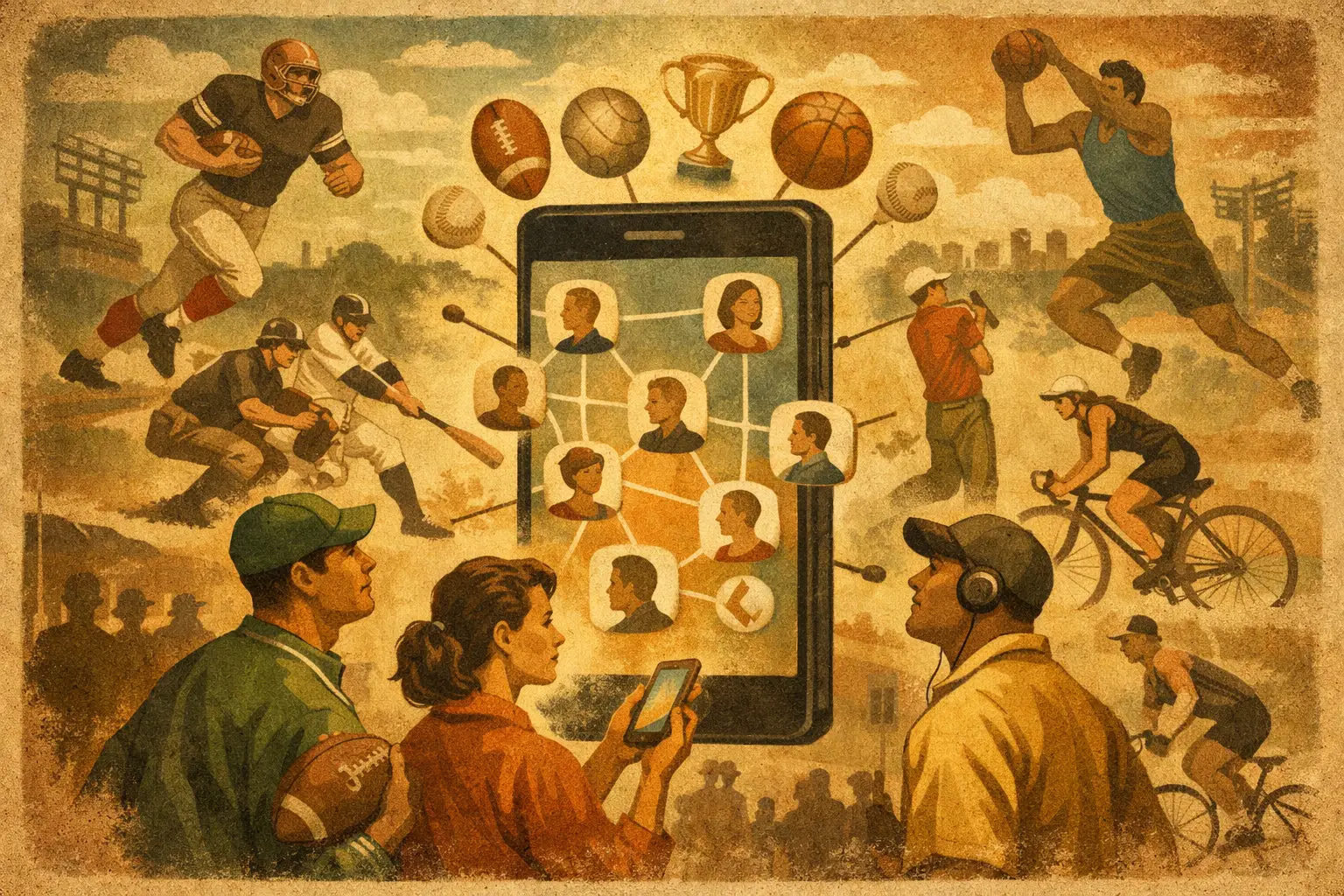
Most sports apps solve one small problem. You can book a court here, join a league there, track a run somewhere else, and message your group in a totally different app. That patchwork is exactly why an all sports social network app matters. If getting from “I want to play” to “I’m playing tonight” still takes five tools and a dozen texts, the product is not built around real sports life.
We think the better model is simple. Put players, venues, events, competition, and progress in one network. Not one app for basketball, another for tennis, and a third for pickup soccer. One place to find your people, your next game, and a reason to come back tomorrow.
Why an all sports social network app matters
Sports communities are still too fragmented. A lot of apps are designed around a single activity, a single booking flow, or a single admin use case. That can work if you only ever play one sport in one city with the same people every week. But that is not how most active people actually move.
You might hoop on Tuesday, play tennis on Saturday, join a casual soccer run while traveling, and want to try pickleball because your friends won’t stop talking about it. A single-sport product breaks as soon as your routine gets more interesting. An all sports social network app fits the way people really participate - across different sports, skill levels, friend groups, and schedules.
That broader model also lowers the barrier for newcomers. Established leagues can feel closed off. Group chats can feel cliquey. Niche sports can feel impossible to break into if you do not already know where people meet. A cross-sport network gives people more entry points. You do not need to arrive with a full team or a polished resume. You just need a way in.
The real job of the app is participation
A sports product should not just store information. It should create motion.
That means the core loop has to be action-based. Can you discover a nearby venue, see what is happening there, join a pickup event, challenge another player, or create your own session in a few taps? Can a casual player use it without feeling like they are signing up for a season-long commitment? Can a competitive player build toward rankings, teams, and league play without starting from scratch every time?
This is where a lot of platforms miss. They are either too passive, acting like a directory, or too rigid, acting like formal league software. Most players need both flexibility and structure. Some nights you want a quick run. Other times you want standings, stats, accountability, and something to chase.
An all sports social network app should support that full range. Pickup. Challenges. Teams. Leagues. Drop-in discovery for beginners. Progression for regulars. That range is not feature bloat if it reflects how people actually play.
What players should expect from an all sports social network app
The first expectation is obvious - it should help you find places to play and people to play with. But the better question is how well it handles context.
If you are at home, the app should surface your local scene. If you are traveling, it should help you quickly figure out where the action is without making you start from zero. If you are trying a new sport, it should not bury beginner-friendly options under highly competitive groups. If you already have your crew, it should still make organizing easier than a group text.
The second expectation is identity. Players do not want to rebuild their sports life every time they switch formats. Your profile, playing history, ratings, achievements, and social connections should carry across the network. That is one of the strongest arguments for the all-sports model. Your sports identity is bigger than one activity.
The third expectation is momentum. Good products make it easier to return. Stats, goals, trophies, achievements, and visible progress can help, but only if they are tied to meaningful participation. Gamification works when it rewards showing up, improving, competing, and contributing to the community. It feels empty when it is layered on top of a weak social experience.
The best all sports social network app is built around modules that work together
This category gets much more useful when the major parts of sports life connect instead of living in silos.
Events should turn intent into action
Events are where interest becomes commitment. You see a run, join it, and now your week looks different. That sounds basic, but a lot depends on execution. Players need to know what sport, where, when, who is going, and what level to expect. Organizers need easy tools to create sessions, manage attendance, and build consistency.
If events are too hard to create, communities stay invisible. If they are too vague, people stop trusting them. The best event systems create enough structure to reduce flaking without making every game feel overly formal.
Challenges should make competition social
Direct challenges give the network energy. They let players turn friendly talk into real matchups without waiting for a full league to form. That matters for one-on-one sports like tennis, but it also matters for basketball crews, soccer squads, or any group that wants a clear next game.
The trade-off is moderation and expectations. Challenges need clarity around format, level, timing, and results. Done right, they create recurring engagement. Done poorly, they create noise.
Teams and leagues should create longer-term commitment
Not every player wants only pickup. Teams and leagues are how casual participation evolves into routine. They add identity, accountability, and story. You are not just finding a game. You are building something with people.
This is also where an app can support organizers without becoming organizer-only software. Teams need rosters and communication. Leagues need standings and structure. Players need visibility into what they are joining. If those pieces connect naturally, the network becomes stickier over time.
Stats and trophies should reward progress, not vanity
People like measurable improvement. That is true for competitive athletes and casual players alike. Stats tracking, goals, trophies, and achievements can make sports apps fun again because they create feedback. You show up, you play, and the app reflects that effort.
Still, not every sport tracks the same way, and not every player wants the same level of detail. An all-sports product has to respect those differences. The answer is flexibility. Let players celebrate consistency, performance, participation, and milestones without forcing every activity into the exact same mold.
Why reviews, ratings, and live activity matter
Trust is one of the hardest things to build in local sports. People want to know if an event is real, whether players are respectful, and what kind of experience they are walking into. Reviews and post-game ratings can help if they are handled fairly. They create social accountability and reward good community behavior, not just winning.
Live streaming and live activity add another layer. For some users, that is entertainment. For others, it is proof of participation and a way to earn rewards or build reputation. Not everyone will care about broadcasting games, and that is fine. The point is optional visibility that strengthens the network for those who want it.
One network across 122 sports changes the value proposition
An app that covers 122 sports is not just going broad for the sake of it. It is making a bet that sports culture works better when communities are connected instead of boxed into separate products.
That creates obvious advantages. More discovery. More crossover. More reasons to stay active year-round. A better experience when you travel or change routines. It also helps niche sports that often struggle for visibility. If the platform only works when a sport is already mainstream, it is not really serving sports culture. It is just following it.
There are trade-offs, of course. Going broad makes product design harder. Different sports need different flows, scoring logic, social norms, and progression systems. The answer is not to flatten everything into generic features. The answer is to build shared infrastructure while leaving room for sport-specific experiences where they matter.
Built in public beats guessing
The strongest version of this product category will not come from a company guessing what sports communities need behind closed doors. It will come from users shaping the roadmap in public.
That matters because local sports behavior is messy. People organize in different ways. Venue relationships vary by city. Competitive expectations vary by sport. The only way to build something that feels alive is to stay close to the players, organizers, and early adopters using it every week.
That builder mindset is part of what makes this space interesting right now. Users are not just customers. They can be testers, voters, contributors, and community starters. If you care about sports tech, that is a much more exciting invitation than downloading another static utility and hoping it improves someday.
Crewters is building in that direction - as a free, iOS-first network where players can find venues, create events, issue challenges, join teams, compete in leagues, track progress, and help shape what gets built next.
The best all sports social network app should make sports easier to start, easier to stick with, and more fun to share with other people. If it can do that, it becomes more than software. It becomes part of your routine, your crew, and the way your local game grows.