
Pickup Sports App vs Group Chat
March 29, 2026 · Chris Palmer
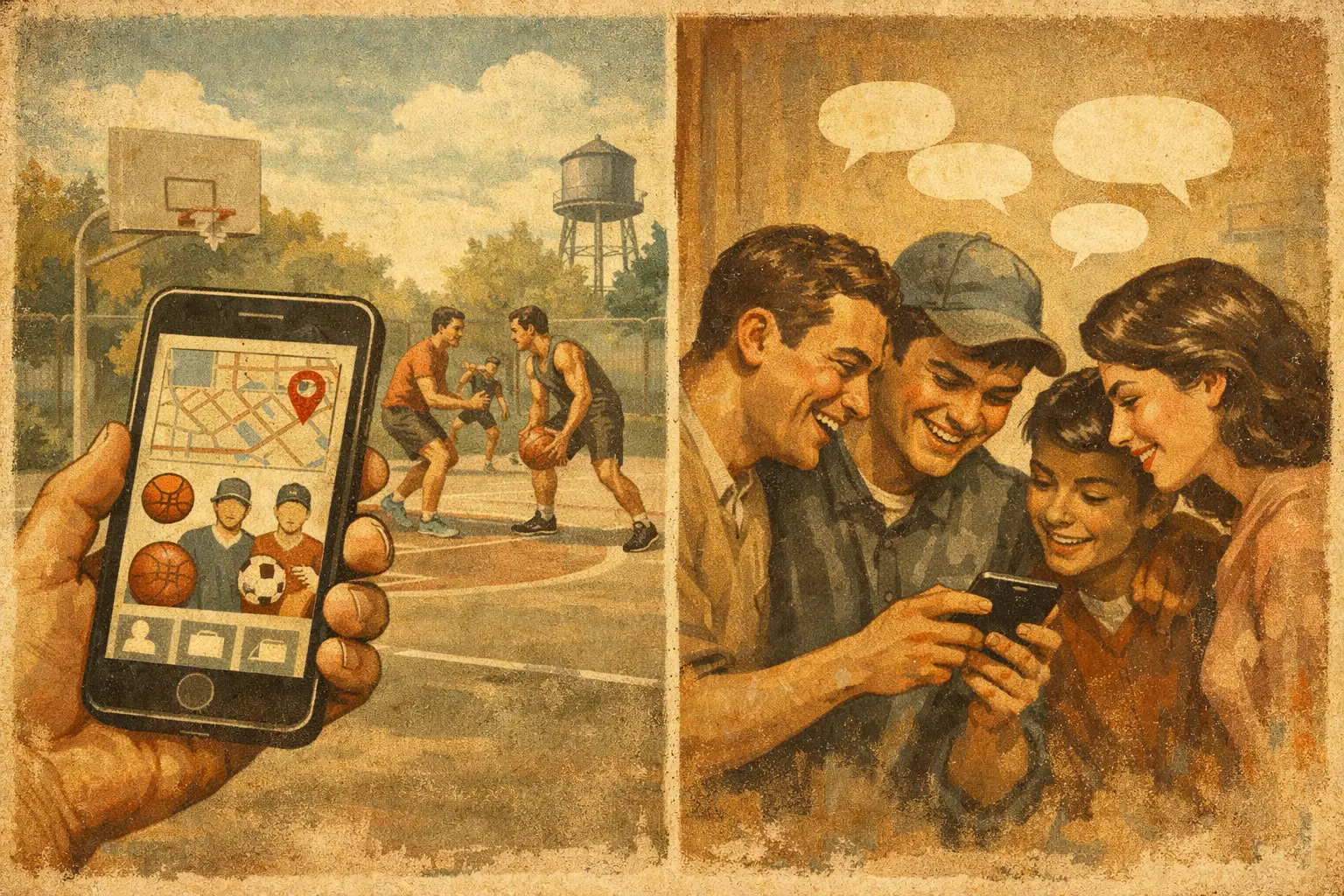
Your Wednesday run is supposed to start at 7. By 5:42, the group chat has 63 unread messages, three maybes, one guy asking who has a ball, and two people reacting with fire emojis instead of giving a yes or no. That is the real pickup sports app vs group chat debate - not theory, just whether a game actually happens.
For years, group chats have been the default tool for organizing casual sports. They are easy, familiar, and already on everyone’s phone. But once you move past a tight circle of friends, they start showing cracks fast. If your goal is to play more often, fill games faster, and build something bigger than the same rotating eight people, a dedicated sports app usually gives you more to work with.
Pickup sports app vs group chat: what changes?
The biggest difference is simple. A group chat is built for conversation. A pickup sports app is built for action.
That sounds obvious, but it matters. When people use a chat to organize basketball, soccer, tennis, volleyball, or anything else, they are forcing a messaging tool to do the job of an event system, player directory, RSVP tracker, reminder engine, and sometimes even a lightweight reputation system. It can work. It often does work. It just gets messy the moment the group grows, people miss messages, or you need new players.
A sports app changes the structure. Instead of asking everyone to scroll back and figure out who is in, the event itself becomes the source of truth. Time, location, skill level, number of spots, who joined, and what kind of game it is all live in one place. The chat supports the game instead of replacing it.
That is why this comparison is less about tech preference and more about participation. If you want fewer drop-offs and more actual games, structure helps.
Where group chats still win
Group chats are not bad. In some situations, they are exactly right.
If you already have a locked-in crew that plays every Saturday at the same park, a text thread may be enough. Everyone knows the format. Everyone knows the regulars. You are not trying to discover venues, invite new people, or balance a roster. You just need a quick pulse check.
Chats also feel casual in a good way. They keep the social energy high. Trash talk, ride coordination, postgame photos, and last-minute updates all fit naturally there. That part matters because pickup sports are social by nature. Nobody wants a sterile experience.
The problem is that group chats scale poorly. The same looseness that makes them fun also makes them unreliable. Messages get buried. People answer late. Some never reply but still show up. Others say they are in and ghost. If the organizer is the only person keeping track, the whole thing depends on one person doing unpaid admin every week.
That is fine for a while. Then it becomes work.
Where apps pull ahead fast
A pickup sports app earns its spot when the game needs more than conversation.
The first win is visibility. In a chat, attendance is scattered across replies, reactions, and side conversations. In an app, players can join an event and claim a real spot. That reduces ambiguity, which is one of the biggest reasons games fall apart.
The second win is discovery. A chat is closed by default. If someone drops out two hours before tipoff, you need to know somebody who knows somebody. An app can open the door to nearby players who are also looking for a game. That is a major shift, especially for people who are new in town, traveling, changing routines, or trying a new sport.
The third win is continuity. Good pickup scenes are hard to build because they rely on momentum. If each game lives in a separate text chain, there is no larger network effect. A sports app can connect events, players, teams, and venues so one good run leads to the next one. That is how a community starts to compound.
The real issue: access versus familiarity
Most people do not choose group chats because they are better. They choose them because they are already there.
That familiarity matters. No downloads. No onboarding. No need to convince people to learn a new interface. For organizers, that low friction is attractive.
But there is another kind of friction that shows up later: hidden friction. It is the friction of uncertainty, no-shows, weak discovery, and lost context. It is the friction of asking the same questions every week. It is the friction of trying to turn a private thread into a public sports community.
So the better question is not, Which tool is simpler today? It is, Which tool creates less work over time?
If you only organize for people you already know, group chat might stay simpler. If you want to grow participation, mix skill levels more intentionally, create recurring events, or make your local scene easier to join, an app starts winning pretty quickly.
Pickup sports app vs group chat for different players
The answer changes based on who you are.
For a casual player with a dependable friend group, chat can be enough. You are optimizing for convenience, not growth.
For a student, young professional, or anyone with an inconsistent schedule, an app is often better because it helps turn free time into real options. You do not need to wait for one thread to wake up. You can look for active games.
For organizers, the gap is even wider. Once you are managing venue details, balancing sides, replacing late cancellations, or coordinating multiple sports, chat becomes a messy control panel. An app gives you cleaner systems.
For newcomers, group chats can be the hardest environment of all. They are usually built around existing relationships. If you are not already in the circle, you are outside the game before it starts. A sports app can lower that barrier by making events visible and joinable without needing a personal introduction.
That inclusivity matters. A lot of people want to play but feel like they missed the social entrance exam. Better tools can fix that.
What group chats can’t really do well
This is where the comparison gets practical.
A group chat can help gather interest, but it does not naturally organize a sports ecosystem. It does not map venues well. It does not make player profiles useful. It does not create progression. It does not reward consistency. It does not give communities a strong memory of who plays, who hosts, who improves, and who shows up.
That last point is underrated. In sports, participation is identity. People want to feel momentum. They want to see stats, results, streaks, trophies, ratings, or proof that they are part of something bigger than one text thread. Those features are not fluff when they motivate players to come back.
This is also where an all-sports network becomes more interesting than a single-use scheduler. Most players are not one-dimensional. Someone might hoop during the week, play tennis on weekends, and be open to trying pickleball or soccer with the right group. A broader platform reflects how people actually move through sports and communities.
The trade-off nobody should ignore
Apps are better at structure, but structure only works if people use it.
A half-empty app with no local activity is worse than a lively group chat. That is the honest trade-off. The best sports tool is the one your community will actually open and act on.
That means adoption matters. If an app makes it easy to create events, challenge friends, join teams, compete in leagues, and discover nearby play across different sports, it has a strong case. If it also gives users a voice in what gets built next, that is even better because communities stick when they feel ownership.
That builder mindset is part of why platforms like Crewters are worth watching. The product is not just trying to replace a text thread. It is trying to make sports apps fun again by connecting pickup, venues, teams, leagues, progression, and community feedback in one place. That is a bigger swing than simple coordination, and for a lot of players, it is the right one.
So which one should you use?
Use a group chat when the group is stable, the stakes are low, and everyone already knows the routine.
Use a pickup sports app when you want better attendance, cleaner organization, easier discovery, and a real path from one-off games to actual community.
For most active players, this is not even an either-or decision. Chat still has value for hype, jokes, and quick updates. But if the chat is doing all the heavy lifting, you are probably leaving games on the table.
The best local sports scenes are not built on unread messages. They are built on showing up, making it easy for others to show up too, and using tools that turn scattered interest into a real crew. If your current setup keeps almost working, that is your sign to build something better.