
Why Real Life Sports Played Like a Video Game Work
April 3, 2026 · Chris Palmer
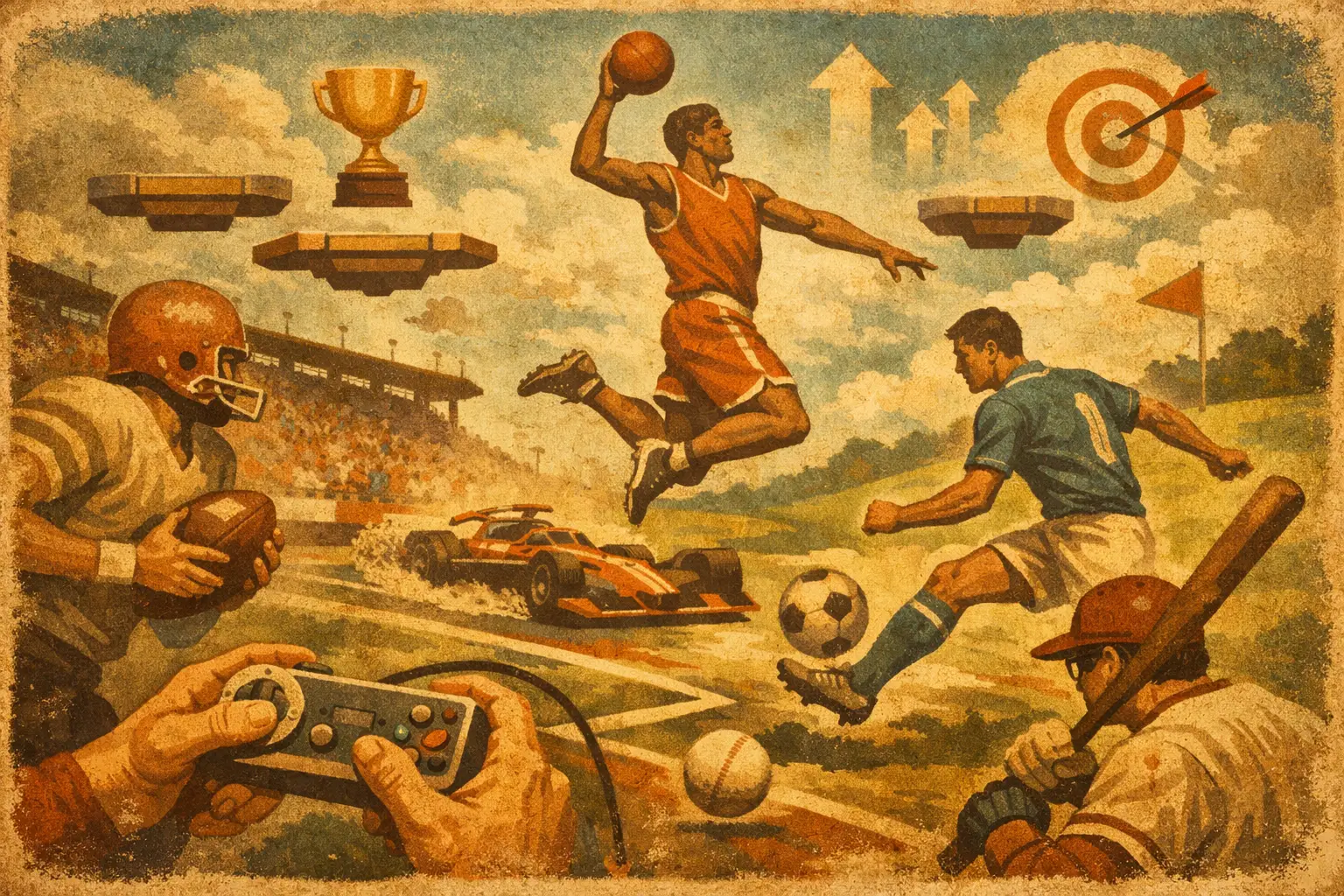
Most people do not quit sports because they stopped loving sports. They quit because the friction stacks up. No one knows where to play, who is showing up, whether the game will be competitive, or if any of it will feel worth repeating. That is why real life sports played like a video game is more than a catchy idea. It fixes the part between wanting to play and actually getting on the field, court, or track.
Video games figured this out a long time ago. They do not just offer gameplay. They offer progression, matchmaking, visible goals, rewards, status, and a reason to come back tomorrow. Real-world sports have always had the raw ingredients for that same loop. What they lacked was a layer that makes participation easier, more social, and more trackable.
That shift matters for serious athletes, casual hoopers, travelers looking for a run, and people trying a new sport without getting iced out by established groups. If sports apps are going to be fun again, they need to do more than list a venue or post a score. They need to make the whole experience feel alive.
What real life sports played like a video game actually means
This does not mean turning basketball into cosplay or making soccer feel fake. It means applying the best parts of game design to the actual sports experience.
In practice, that looks like clear progression. You join a pickup game, log your result, build a profile, earn achievements, get rated, and see your improvement over time. You challenge another player directly, form a team, enter a league, and stack your wins. Each action creates momentum. Instead of every game living and dying in a text thread, your sports life starts to feel connected.
That is the core appeal of real life sports played like a video game. The game is still real. The sweat is real. The competition is real. But the surrounding system gives your effort structure, memory, and payoff.
Why the old way loses people
A lot of sports participation still runs on scattered group chats, flaky RSVPs, and local knowledge that only insiders have. If you are already plugged in, that can work. If you are new in town, trying to get back into shape, or curious about a niche sport, it is brutal.
This is where traditional sports culture has a blind spot. It often assumes people will keep jumping through logistical hoops because they love the sport enough. Some do. A lot do not. They pick the easier entertainment option instead.
Video games compete hard on convenience and retention. You open an app, know what your next objective is, and get immediate feedback. Real sports need some of that same energy if they want to win more of people’s time.
The features that make sports feel more game-like
The strongest systems are not gimmicks. They reduce friction and increase motivation.
Matchmaking and better game discovery
A huge reason people stop playing is simple: they cannot find the right game. Maybe the skill level is too high, too casual, too far away, or too inconsistent. Good sports platforms solve this by making discovery feel more intentional.
Instead of hoping someone posts in the right chat, players can find nearby venues, open runs, challenges, or teams that match what they want. That is basically sports matchmaking. And yes, it changes everything.
Progression that rewards showing up
A rec player may never care about a formal ranking system, but they still care about momentum. They want to feel like their Tuesday night tennis match or Sunday soccer run adds up to something.
This is where stats, goals, trophies, streaks, and achievements work. Not because everyone is chasing digital badges, but because visible progress makes effort feel real. If you played six weeks in a row, improved your rating, and earned recognition for it, you are more likely to keep going.
Rivalries, challenges, and status
Competition gets stronger when it has context. A random game is fun. A rematch against someone who beat you last month is better. A direct challenge with a visible result is better still.
That is one of the smartest lessons from gaming. People stay engaged when there is identity attached to performance. Not in a fake way. In a social way. You know who your rivals are. You know who is climbing. You know who keeps showing up.
Feedback loops that build community
Sports are social, but the systems around sports are often not. Ratings, reviews, event history, and shared team records create a memory of the community. They help people find reliable teammates, competitive opponents, and organizers who actually deliver quality runs.
There is a trade-off here. Any rating system can get messy if it is not designed well. It needs context, fairness, and enough participation to be useful. But when done right, it helps people trust the next game before they commit.
Why this model works for casual players too
Some people hear gamification and assume it is only for highly competitive athletes. That misses the point.
The best version of this model lowers the barrier for everyone. A casual player does not need to be chasing elite performance. They just need an easier way to join a game, meet the right people, and feel like they belong. A beginner in volleyball or pickleball might be more motivated by simple milestones and reliable event hosts than by winning a league title.
That is why the model works across skill levels. Competitive users get ranking, rivalries, and measurable growth. Newer or more casual users get clarity, accountability, and a reason to return. Different motivations, same loop.
Real life sports played like a video game across more than one sport
This gets more interesting when it is not locked to a single community. Most players are not one-dimensional. Someone can play basketball twice a week, join a social soccer game on weekends, and experiment with padel or spikeball when friends invite them.
A fragmented app ecosystem does not reflect how people actually move. Real life sports played like a video game works best when the system follows the player across sports, venues, and formats. Pickup, one-on-one challenges, teams, leagues, and personal progression should live in the same world.
That is part of what makes a platform like Crewters compelling. It is built around the idea that sports participation should feel connected, not siloed. You should be able to find your crew, create an event, throw out a challenge, join a team, track your stats, earn trophies, and help shape what gets built next. That is not just feature stacking. It is a better sports loop.
The catch: gamification can go bad
Not every game mechanic improves sports. Some make the experience worse.
If rewards are too shallow, they feel childish. If rankings are too harsh, newcomers get discouraged. If every interaction becomes a performance metric, the social side starts to disappear. Sports apps need to know when to push competition and when to support access.
That balance depends on the sport and the community. A tennis challenge ladder can benefit from strong rankings. A beginner-friendly pickleball meetup probably needs a softer structure. The same feature will not land the same way everywhere.
This is also why community-led product building matters. The people using the system should help decide which mechanics feel motivating and which ones feel forced. Sports are local, personal, and cultural. The product has to listen.
What comes next
The next wave of sports tech is not about replacing leagues or inventing fake competition. It is about making real participation easier to start and harder to drop. More people will expect sports apps to do what games already do well: show progress, reduce friction, create identity, and turn one good session into a habit.
That future is bigger than elite athletes. It is for the player who wants a solid run after work, the student trying to find a team on campus, the traveler looking for a local game, and the organizer who is tired of managing chaos in text chains.
When sports feel more connected, more responsive, and more rewarding, more people play. That is the whole point. Build systems that make showing up easier, and the love of the game usually takes care of the rest.