
Why Live Stream Pickup Games Are Growing
May 28, 2026 · Chris Palmer
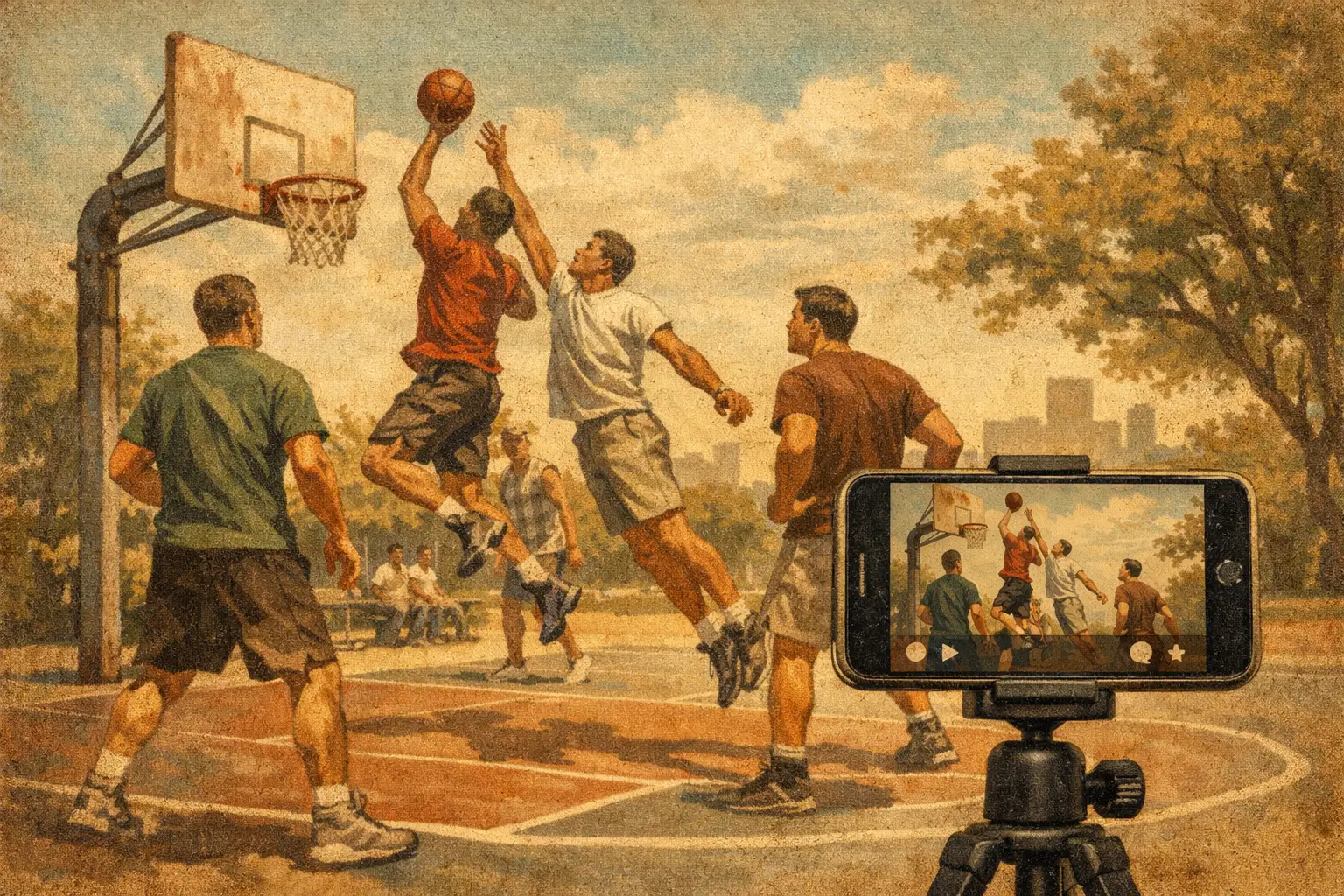
The best pickup run of the week usually disappears the second everyone leaves the court. One nasty crossover, a last-second winner, a surprise turnout - then it lives on as a blurry clip in one group chat, if it gets saved at all. Live stream pickup games change that. They turn local play into something people can watch, react to, revisit, and build around.
That shift matters more than it might seem at first. For players, streaming adds visibility, accountability, and a reason to show up sharp. For organizers, it makes games easier to promote and easier to grow. For communities, it helps turn random participation into something that actually feels connected. If we want sports apps to be fun again, not just functional, this is one of the clearest places to build.
What live stream pickup games actually change
Pickup sports have always been social. What they have not always been is trackable, discoverable, or easy to share beyond the people physically there. A live stream gives a casual game a public layer. Suddenly, friends who could not make it can tune in. New players can see the level before joining next time. Organizers can prove that their weekly run is real, active, and worth showing up for.
That visibility changes behavior in useful ways. Players tend to bring more energy when they know the game is being watched. Not because every run needs to become a performance, but because attention raises the standard. People communicate more, compete harder, and usually take the event a little more seriously. In the best cases, that makes the game better for everyone.
There is also a simple community effect. The stream becomes a digital sideline. People comment, react, and stay involved even when they are off-site. That matters for sports communities that are trying to grow without becoming exclusive. A live stream can make a pickup event feel open instead of closed.
Why players want more than a group chat now
Group chats still work for last-minute coordination, but they are weak at momentum. Messages get buried. New people feel out of the loop. If you missed the game, you missed the story. Streaming helps solve that because it creates a shared reference point.
When players can watch a local soccer match from the sidelines at work, or catch the final game of a park basketball run from home, they stay connected to the rhythm of the community. That makes it easier to come back next week. It also lowers the barrier for first-timers. Watching one stream is often less intimidating than walking into an established game cold.
This is especially relevant for younger players and sports-curious adults who want an easier entry point. They do not just want a place to play. They want context. What is the vibe? Is it casual or intense? Who shows up? How many people are there? Live stream pickup games answer those questions faster than a long event description ever could.
The upside for organizers and venues
If you organize games, you already know the hardest part is consistency. One strong week means nothing if the next two fizzle. Attendance is habit-driven. People show up when they trust that others will too.
Streaming can help build that trust. A live event with real people, real energy, and a visible venue sends a stronger signal than a text post saying, "We play every Thursday." It shows proof of life. That matters when you are trying to establish a new run, revive a struggling one, or bring in players from outside your immediate circle.
Venues benefit too. A streamed pickup event gives parks, gyms, and courts extra visibility without needing polished production. It highlights usage, atmosphere, and community activity. For a venue trying to become a regular sports hub, that kind of organic exposure is useful.
There is a trade-off, though. Not every pickup game should feel like content production. If streaming becomes distracting or intrusive, it can hurt the thing that made the run fun in the first place. The setup has to stay lightweight. The game still comes first.
Live streaming works best when it rewards participation
The real opportunity is not just broadcasting games. It is building a loop around participation. Stream the event, track what happened, recognize the players, and give people reasons to keep coming back.
That is where the format becomes bigger than entertainment. A streamed game can feed player ratings, post-game reviews, stat tracking, achievements, and social proof. Instead of the event ending at the final point or final whistle, it rolls into the next action. Maybe someone earns a badge for consistency. Maybe a player’s performance gets noticed and leads to a direct challenge. Maybe a newcomer watches this week and joins next week.
That progression matters because pickup sports often lack continuity. Leagues have standings, records, and clear structure. Casual games usually do not. Streaming can help bridge that gap without turning everything into a formal league. You keep the spontaneity, but add memory and momentum.
That is one reason this model fits community-led sports platforms so well. If players can live stream games, earn rewards, and build a visible history over time, they are not just using an app to schedule. They are contributing to a living sports network.
Not every sport uses live stream pickup games the same way
Basketball is the obvious example because it is fast, visual, and easy for spectators to follow. A close half-court game streams well. Big plays are easy to clip. The social payoff is immediate.
Soccer can work too, especially small-sided games, but it depends more on camera position and field size. Tennis has a different advantage. The stream can attract players who care about matchups, consistency, and improvement over time. Niche sports may benefit even more because streaming helps communities that are smaller or geographically spread out feel less isolated.
That is the bigger point. The value of live streaming is not identical across all 122 sports. It depends on pace, venue layout, audience habits, and how much a community wants visibility. Some groups will use it for hype. Others will use it for discovery, accountability, or progression. Good product design should respect those differences instead of forcing one content style onto every sport.
What makes a good live stream experience for pickup sports
Most players do not need studio-level production. They need a stream that is simple enough to start, stable enough to watch, and tied closely to the event itself. If setup takes too long or requires extra gear, adoption drops fast.
The best experience usually looks like this: create the event, go live with minimal friction, let the community watch, then connect the stream back to the players and results. That last part matters. A disconnected video is just a broadcast. A stream attached to an event, roster, venue, and post-game activity becomes part of the sports graph.
Moderation and consent matter too. Some players love the camera. Others do not. Community trust depends on clear expectations. If the stream is visible, participants should know that in advance. If clips or ratings come after the game, the system should feel fair, not invasive.
Why this trend is bigger than content
A lot of apps treat sports like logistics. Find a game. Book a court. Send a message. Done. Useful, but forgettable. Live stream pickup games push in a different direction. They make sports participatory before, during, and after the game.
That creates stronger network effects. One event is no longer one event. It is a reason to watch, react, invite, challenge, rate, and return. It gives communities a pulse people can actually see. For players who care about competition, it adds stakes. For new users, it adds confidence. For builders, it opens up better ways to reward consistency and shape growth around real activity.
We think that is where sports products get more interesting again. Not by copying pro sports media, and not by over-engineering casual play, but by helping local games feel visible and worth rallying around. A good pickup run already has energy. The right live stream just gives that energy somewhere to go.
If you are building or joining local sports communities, pay attention to what happens when games stop disappearing the moment they end. That is where routine becomes recognition, and where a simple run can start feeling like a real scene.