
What Makes Sports Apps Addictive?
June 28, 2026
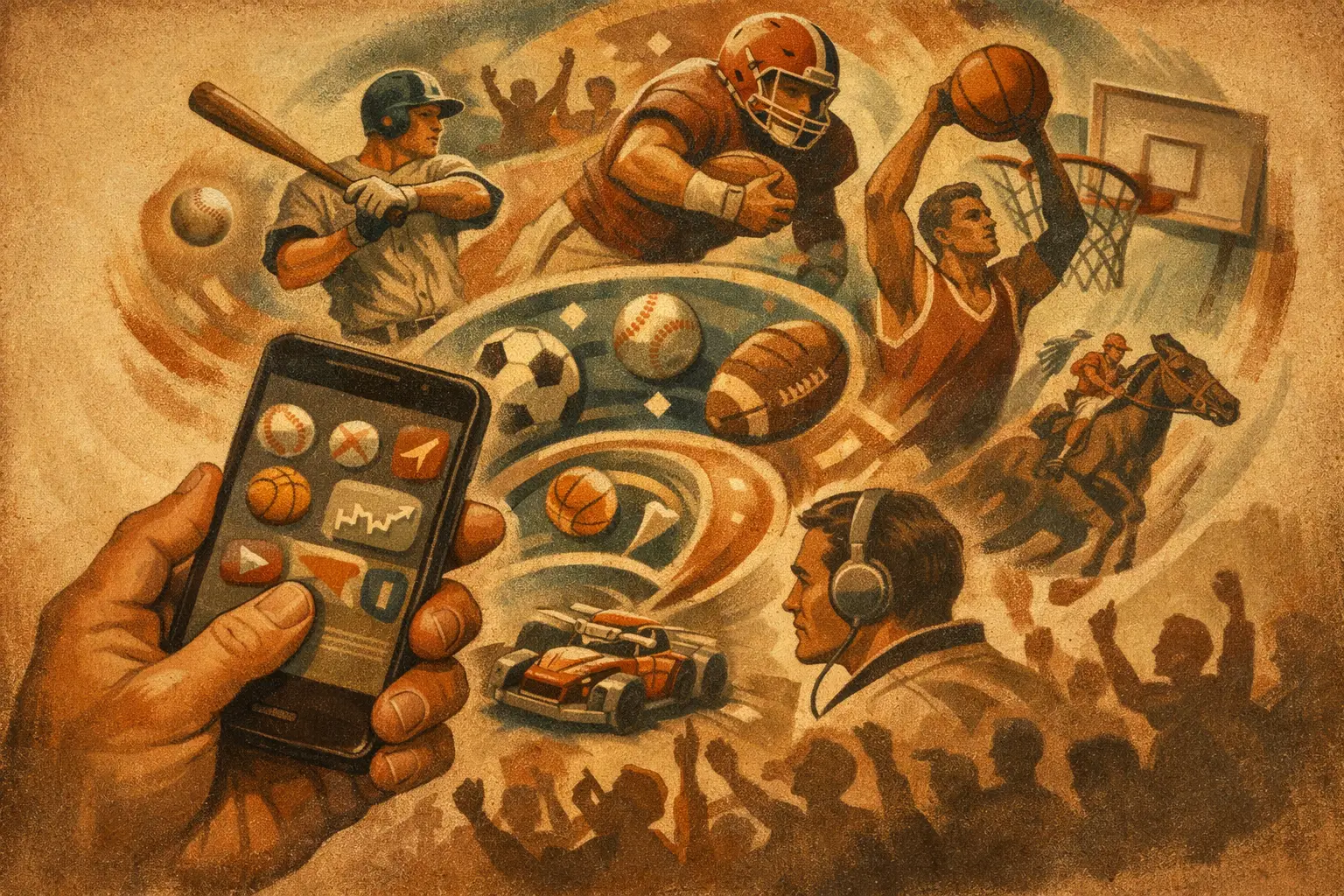
You can tell within about 30 seconds whether a sports app is built for real play or just passive browsing. If it gets you from “fancy a game?” to “court booked, mates invited, match on” with almost no friction, you feel the pull immediately. That is what makes sports apps addictive - not addiction in the dark-pattern sense, but the kind of repeat use that comes from momentum, community, and the simple satisfaction of getting active more often.
For sports people, the best apps do not merely entertain. They shorten the distance between intent and action. They give you a reason to check in, a reason to come back, and a visible sense that your effort counts for something. If we are building sports apps that people actually want to keep opening, that is the standard.
What makes sports apps addictive in the first place?
Most sports apps become sticky when they combine three things that already matter to athletes and casual players: progress, people, and timing. Progress gives you evidence that you are improving. People give you accountability, rivalry, and belonging. Timing matters because sport is often spontaneous. A free hour appears, a five-a-side slot opens up, a friend sends a challenge, and suddenly an app becomes useful right now rather than vaguely interesting later.
That combination is powerful because it taps into behaviour that already exists offline. Plenty of digital products try to manufacture a habit from scratch. Sports apps have an easier job if they are smart enough to support an existing one. If you already care about playing better, playing more often, or finding your crew, then the app is not creating desire. It is organising it.
Still, there is a difference between an app that gets downloaded and an app that becomes part of someone’s week. The addictive feeling usually comes from a tight loop: notice something, take action, get feedback, want to return. When that loop is tied to your social life and your fitness routine, it gets much stronger.
The real hook is action, not content
A lot of apps mistake scrolling for engagement. In sport, that only goes so far. Highlights and clips can pull attention, but action is what builds loyalty. If I can join a local session, set up a challenge, or find a venue before the train gets to my stop, the app earns its place on my phone.
That is why low-friction design matters so much. The fewer steps between opening the app and committing to a game, the more often people use it. Search, book, join, message, confirm. Those actions should feel immediate. The strongest sports products remove excuses. They do not ask users to plan a perfect season. They help them say yes to a match on Wednesday.
There is a trade-off here. Too much simplicity can make an app feel shallow, especially for serious players who want deeper stats, rankings, or structured competition. Too much complexity can slow everything down. The best products layer the experience. New users can get into a game quickly, while returning players unlock more reasons to stay.
Progression is one of the biggest answers to what makes sports apps addictive
Sport already comes with built-in progression. You improve your fitness, sharpen your technique, win more often, and learn who you match up well against. Good apps make that progress visible. Great apps make it feel earned.
Stats tracking, goals, achievements, ratings, trophies, streaks - these are not just gimmicks when they reflect genuine activity. They turn vague effort into proof. If you have played three matches this week, moved up a level, or finally beaten someone who has had your number for months, that matters. It gives the next session a bit more edge.
This is where gamification works and where it fails. It works when the reward maps to something real. It fails when badges are handed out for meaningless taps. Players can tell the difference. A trophy for completing a challenge, maintaining a run of matches, or improving your rating after actual games feels fair. A random badge for opening the app six days in a row without playing is much weaker.
For a community-first sports platform, progression should not only reward elite performance. It should also reward consistency, participation, and improvement. That is how you keep the door open for the student looking for a casual run-out, the tennis player rebuilding confidence, and the newcomer trying a sport for the first time.
Social pressure, but in a good way
People often underestimate how much of sport is social accountability. You are more likely to turn up if a team is counting on you. You are more likely to train if a rival is one good result away from overtaking you. You are more likely to open the app if there is a message, a fixture, a challenge, or a rating waiting.
That is one of the strongest psychological answers to what makes sports apps addictive. They create social stakes. Not fake urgency, but real-world consequences. If you ignore a shopping app for a week, not much changes. If you ignore a sports app, you might miss the five-a-side, lose your place in the squad, or fail to respond to a challenge.
The social layer works best when it feels specific. Generic feeds have limited pull. Direct challenges, team invites, player reviews, league tables, and event updates are much more compelling because they involve your actual network and your actual sporting life. It is the difference between watching community happen and being part of it.
There is a fine line, though. Social pressure can motivate, but it can also exclude if an app becomes too cliquey or too focused on top performers. Smart product design gives people multiple ways in. Pickup games, beginner-friendly sessions, mixed ability events, and easy team discovery all help keep the community open rather than gated.
Competition keeps people engaged, but belonging keeps them there
Competition is an obvious hook. Rankings, leaderboards, results, and head-to-head records all give users something to chase. Even casual players love a bit of structure when it is handled well. A challenge system can turn a routine game into a small event. A league table can make weekly attendance feel bigger than one-off exercise.
But belonging is what turns repeat usage into habit. People come back to places where they feel recognised. That can be as simple as seeing familiar names, getting rated fairly after a match, building a reputation, or joining a team that expects you on Thursdays. The app stops being a tool and starts feeling like part of your sporting identity.
That matters even more across multiple sports. Most people do not live in one lane forever. They might play football, try padel, jump into a basketball run, and look for something social while travelling. A platform that supports different ways to play can keep users engaged longer because it fits real life better than single-sport silos do.
The best habit loops are built around real life
The strongest retention loops in sports apps are not abstract. They are grounded in routines people already have. Sunday league. After-work tennis. Lunchtime basketball. Weekly kickabout. Holiday travel with a free evening and no one to play with. If the app consistently helps in those moments, it becomes part of the ritual.
Notifications can help, but only when they are earned. A reminder about a match you joined is useful. A nudge because someone accepted your challenge is useful. A prompt that a nearby session has one slot left is useful. Random noise is not. Users do not mind hearing from an app when the message has context and consequence.
This is also where builder thinking matters. The most addictive sports apps are usually shaped by people who actually play and by communities willing to say what is missing. If users can help shape features, vote on what comes next, and see the product improving around their needs, engagement grows for a deeper reason than novelty. They are not just consuming the app. They are helping build the sports network they want to use.
Crewters leans into that idea because sports apps should feel alive, collaborative, and worth returning to even when the roadmap is still evolving.
So what should users actually look for?
If you are deciding whether a sports app deserves a permanent spot on your home screen, look past the polish. Ask whether it helps you play more often, meet the right people, track progress that means something, and stay accountable to your goals. If it can do all four, repeat use is not a mystery. It is a natural result.
The best sports apps are addictive because they make participation easier and improvement visible. They make sport feel closer, more social, and more rewarding from one week to the next. If an app can turn “someone should sort a game” into “we’re on at 7”, it is doing more than holding attention. It is helping build the habit of play, and that is always worth coming back to.