
What Makes a Great Community Sports App?
March 14, 2026 · Chris Palmer
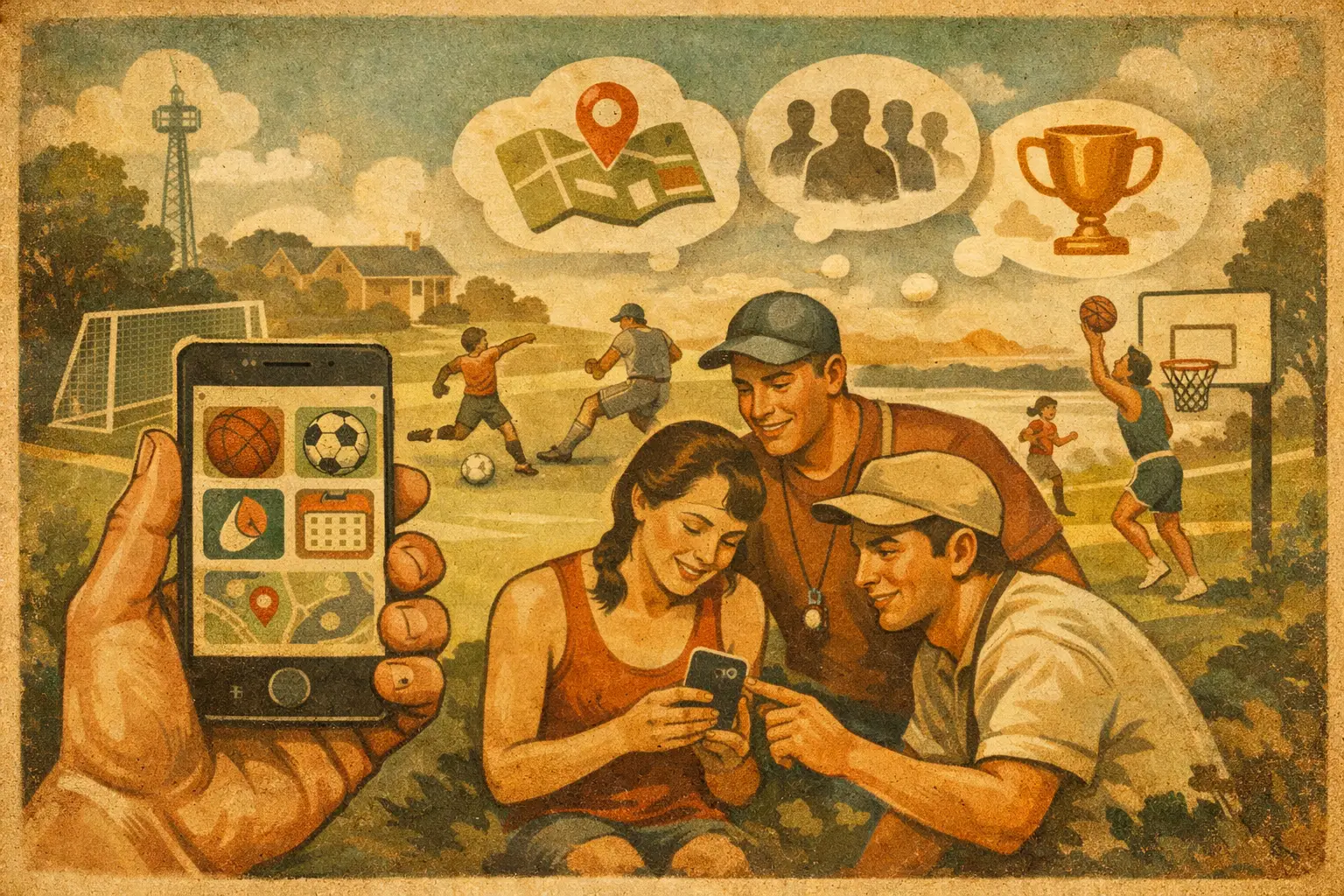
The difference between playing more sports and scrolling past another week often comes down to one thing: can you find the right people, place, and plan fast enough to say yes?
That is the real test of a community sports app. Not how polished the onboarding looks. Not how many empty features sit behind tabs. A sports app only matters if it gets real people into real games, then gives them a reason to come back tomorrow.
For players, that means less friction between “I want to play” and “I’m booked for 7 PM.” For organizers, it means fewer no-shows, easier coordination, and a better way to build a recurring group. For venues, it means visibility and repeat traffic. If an app cannot support all three, it usually turns into a ghost town.
Why a community sports app matters
Most sports participation does not fail because people lack interest. It fails because coordination is annoying. Friends are busy. Group chats die. League signups feel too formal. Existing communities can be hard to break into if you are new in town, traveling, or just trying a new sport.
A strong community sports app closes that gap. It gives casual players a lower barrier to entry and gives competitive players more ways to measure progress, find level-appropriate games, and stay active between league schedules. It also helps communities grow beyond one sport, one neighborhood, or one organizer.
That last part matters more than most apps admit. Sports life is rarely neat. You might play pickup basketball on Tuesdays, tennis on weekends, and try a social soccer run once a month. If every sport lives in its own silo, your participation gets fragmented. A better model is one network where your identity, activity, and progress can travel with you.
What users actually want from a community sports app
People do not download sports apps because they love software. They download them because they want games.
So the basics have to work first. Can you find nearby venues without hunting through five maps? Can you create an event in under a minute? Can you join a game without sending awkward DMs? Can you tell whether a run is beginner-friendly or highly competitive? These are not small UX details. They decide whether the app becomes part of someone’s routine.
After that, the next layer is trust. A useful app shows who is playing, who organized the event, and what kind of experience to expect. Ratings, attendance history, player reviews, and clear event formats help reduce guesswork. That matters for a regular player trying to find quality runs, but it matters just as much for someone showing up for the first time and wondering if they’ll fit in.
Then there is momentum. A lot of apps help people discover one game. Fewer help them build a habit. Stats, achievements, goals, streaks, and progression systems can keep players engaged, but only when they connect to real activity. Gamification without actual community feels fake fast. Gamification tied to showing up, improving, organizing, and competing can make sports apps fun again.
The features that separate active apps from empty ones
A good community sports app is not just a calendar with profile pictures. It needs a few core systems working together.
Events have to be easy to create and easier to join
Pickup sports live and die on speed. If setting up a game feels like project management, people fall back to text threads. Event creation should be quick, clear, and built for action. Time, place, sport, skill level, spots available, and a simple join flow are the basics.
The smart move is making events flexible enough for different sports cultures. A basketball run, a tennis meetup, and a rec soccer session do not need the exact same setup. The app should support structure without forcing every game into the same template.
Challenges add competition without requiring a full league
Not every player wants a season commitment. Some just want to call out a rival, set a match, and keep score. Direct challenges are a strong middle ground between casual pickup and formal competition.
They also create social accountability. A scheduled challenge feels more personal than a broad open invite, and that can lead to better turnout. For competitive users, it gives them a way to stay engaged even when a full team is not available.
Teams and leagues create staying power
One-off events are useful, but teams are where deeper community forms. When players can create or join teams, they move from occasional participation to belonging. Add leagues on top, and the app starts supporting recurring competition, standings, and longer-term identity.
This is where many products get too narrow. If the app only works for established clubs or highly organized leagues, it misses casual users. If it only supports pickup, it leaves growth on the table. The better approach is letting players move from solo discovery to events, then into teams and leagues when they are ready.
Stats and trophies should reward participation and progress
People like proof that they are improving. They also like recognition. Stats tracking, goals, trophies, and achievements work best when they reflect both performance and consistency.
The trade-off is simple: too little tracking feels forgettable, too much tracking feels like homework. The right balance depends on the sport and the audience. Casual players might care more about attendance, streaks, and social wins. Competitive players may want detailed results, rankings, and player ratings. A flexible system can serve both.
Why multi-sport matters more than ever
A lot of sports apps are built around one niche. That can work if the community is already dense. But for most users, especially in cities, campuses, and travel-heavy lifestyles, a single-sport app creates unnecessary walls.
A multi-sport network creates better odds that someone opens the app and finds something worth joining today. Maybe there is no volleyball game nearby this week, but there is a futsal run and a tennis ladder. Maybe a player starts with casual basketball and later joins a structured league in another sport. That kind of crossover is not a side benefit. It is how healthy communities compound.
This is also where venues benefit. A court, field, or facility is rarely tied to one exact use case. The more sports and communities an app can route through that venue ecosystem, the stronger the network becomes.
The community part cannot be faked
Plenty of apps can copy features. Community is harder.
A real community sports app gives users a stake. That might mean voting on feature priorities, joining as early testers, helping shape new tools, or giving feedback that clearly changes the roadmap. When users feel like collaborators instead of just customers, retention looks different. People invite friends. They organize more often. They care whether the product improves.
That builder mindset fits sports better than many companies realize. Athletes already think in terms of reps, progress, feedback, and team culture. If we are building a product for people who love participation, we should build with them, not just at them.
That is part of what makes Crewters interesting. It is not trying to be another narrow utility for one sport or one use case. It is building a free, iOS-first community sports app around 122 sports, with venues, events, challenges, teams, leagues, stats, trophies, live streaming rewards, and player ratings all feeding the same network. More importantly, it is being shaped in public by the people who use it.
What to look for before you commit to an app
If you are choosing a community sports app, ignore the marketing claims for a minute and ask a few practical questions. Are there active players near you? Can you use it while traveling? Does it help beginners get in, not just veterans stay busy? Can organizers fill games without babysitting RSVPs? Does competition feel optional and fun, or overly rigid?
It also helps to think about your own style. If you want a strict league-only experience, one type of app may suit you better. If you want pickup, direct challenges, team play, and room to experiment across sports, you need a broader platform. It depends on whether you are optimizing for one format or for a fuller sports routine.
The best products understand that users change over time. Today you might just want to find a game after work. A month from now you might be tracking stats, building a team, reviewing venues, or organizing a local league. A strong app grows with that behavior instead of forcing you to start over somewhere else.
The next generation of sports products will not win by adding more tabs. They will win by making participation easier, recognition more meaningful, and local sports communities easier to grow. If an app can help you find your people, get on the schedule, compete at your level, and help shape what gets built next, that is not just another download. That is the start of a real sports network.