
Pickup Apps Versus League Registration
June 22, 2026
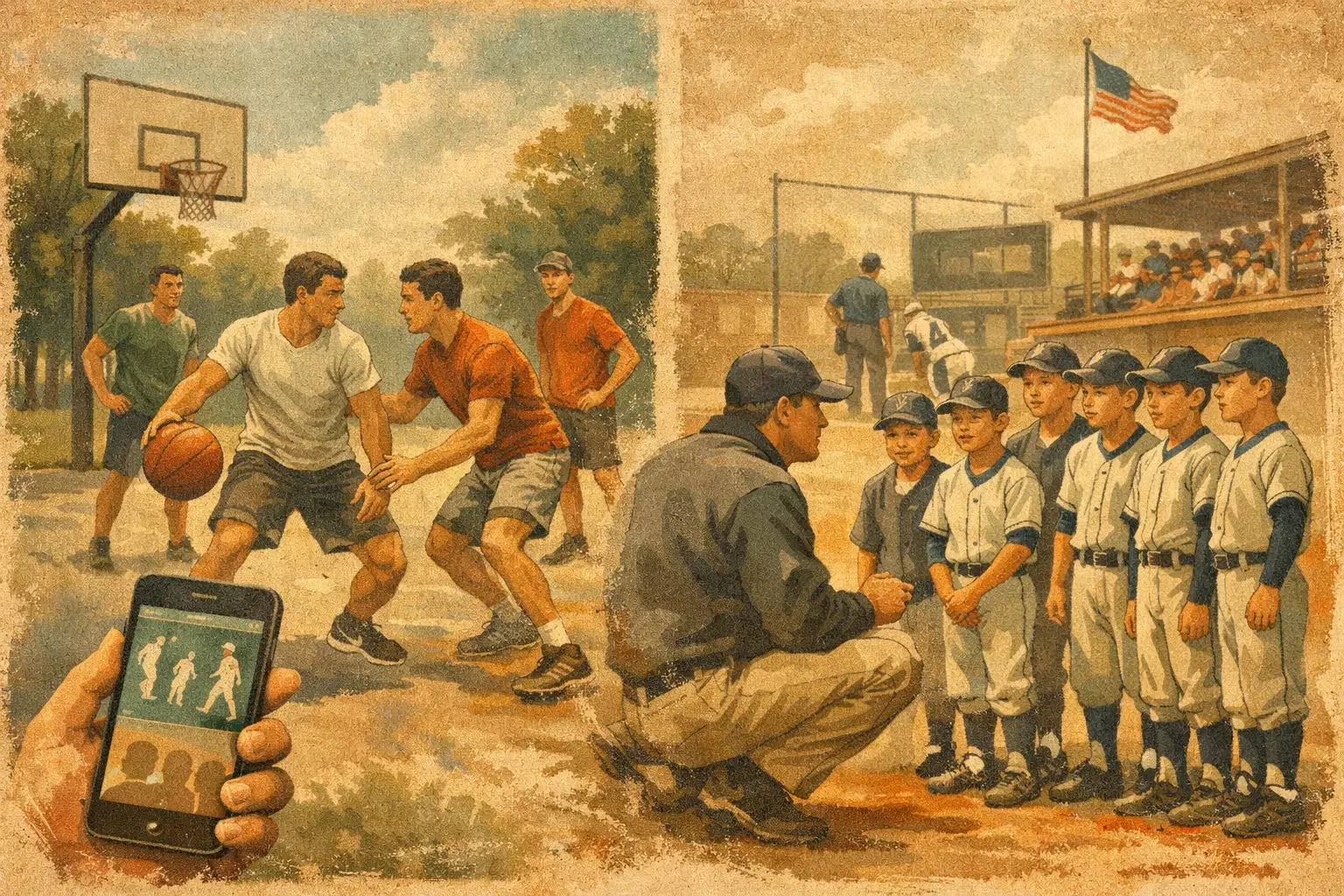
You finish work early, the weather holds, and you fancy a game tonight. That moment is where pickup apps versus league registration becomes a real choice, not a theory. Do you jump into something fast and flexible, or commit to a season with fixtures, fees and a proper team sheet?
For most players, this is not about which option is better in the abstract. It is about what gets you on court, on the pitch or at the venue more often. If sport is meant to fit real life, the format matters just as much as the sport itself.
Pickup apps versus league registration: what changes for the player?
The biggest difference is commitment. Pickup apps are built for immediacy. You find a session, join it, turn up and play. League registration asks more from you up front - sign-up windows, scheduled matches, admin, and usually a longer commitment to a team or season.
That difference shapes everything else. Pickup tends to lower the barrier to entry. Leagues tend to raise the standard of structure. One gives you access. The other gives you continuity.
If you are a student with an uneven timetable, a young professional whose evenings change weekly, or someone getting back into sport after time away, pickup has obvious appeal. It matches how people actually live. You do not need to promise every Wednesday for the next three months just to get a run-out.
But if you thrive on progression, rivalry and the rhythm of regular competition, league registration still holds serious value. A fixed fixture list can be the thing that keeps you honest. It creates accountability in a way ad hoc games often cannot.
When pickup apps win
Pickup works best when friction is the enemy. If the hardest part of sport is finding enough people, choosing a venue and confirming who is actually coming, then a good app removes the dead time between intent and action.
That matters more than people admit. Loads of players do not drop off because they hate sport. They drop off because the logistics get annoying. The WhatsApp goes quiet. Five people say maybe. Someone pulls out an hour before. Suddenly the game never happens.
Pickup apps are strong because they turn scattered interest into actual participation. You can discover local games, join a session while travelling, or test a new sport without the weird social pressure of asking a full team to make room for you. For beginners, that can be the difference between trying something and never starting.
They also make multi-sport habits far more realistic. If you play football one week, padel the next and basketball when your mates are free, league structures can feel restrictive. A flexible platform lets players move with their interests rather than forcing them into one lane.
There is also a social upside. Pickup environments can be more open than established clubs or teams, especially for people who feel shut out by closed groups. New city, new campus, new routine - pickup lets you find your crew without waiting for a formal opening.
Where pickup apps fall short
Freedom has a trade-off. The same flexibility that makes pickup attractive can make it inconsistent. Skill levels vary. Attendance can be less predictable. Match intensity swings depending on who joins. If you are after a tightly balanced contest every week, pickup may not always deliver it.
There is also less built-in progression unless the platform does more than simply list games. A one-off match is great. A connected system that tracks who you played with, how often you showed up, how you performed and what you are building towards is much stronger. Without that layer, pickup can stay casual in a way that limits long-term engagement.
For organisers, the challenge is different. It is easier to get a game live, but harder to create lasting structure around it. If your goal is to build a proper local sports community, recurring events, teams and recognisable rivalries still matter.
Where league registration still delivers
League registration works because it gives sport a backbone. Fixtures are set. Teams know where they stand. Results carry over. Rivalries build. Players improve because they are facing regular competition with something on the line.
For many people, that structure is the whole point. A league gives meaning to training and context to performance. Winning matters more because it affects the table. Showing up matters more because team-mates are relying on you. Even losing can feel useful because it sits inside a bigger campaign.
This format also suits players who want clearer standards. Leagues usually bring more consistency in rules, timings and opposition. If you care about competitive integrity, formal registration is not just admin for admin's sake. It creates a framework that helps everyone take the game seriously.
From an organiser's point of view, league systems are easier to grow once the foundation is in place. Teams return, schedules repeat, and communities build traditions. That kind of stickiness is powerful.
Why league registration can put people off
The problem is not structure. The problem is over-commitment too early.
League registration often asks players to make a decision before they feel ready. Fees, deadlines, roster requirements and fixed dates can all become blockers. That is fine for established players with a settled routine. It is less appealing if you are sports-curious, new to an area, recovering fitness or juggling work shifts.
It can also feel exclusionary. Some leagues are welcoming. Others can look closed off from the outside, especially if most teams already know each other. If someone wants to play but does not already have a squad, the registration process can feel like being told to sort out the hardest part first.
That is why many league pathways leak potential players before they ever get started. The commitment model filters for certainty, while a lot of modern players need a lower-pressure first step.
The real answer is not either-or
The most useful way to think about pickup apps versus league registration is as a pathway, not a rivalry. Pickup gets people moving. Leagues keep some of them anchored. One creates access. The other creates depth.
This matters because sports participation is not linear. A player might start with casual five-a-side after work, join a few direct challenges, form a regular group, then decide they want to enter a structured league. Another player might do the reverse - leave a formal league because life gets busy, then stay active through flexible pickup sessions until they are ready for a bigger commitment again.
The best sports platforms understand this progression. They do not force players to choose one identity forever. They let people move between modes as their goals change.
That is where a more connected model starts to look stronger than either format alone. If your events, teams, leagues, stats and rewards all live in one place, pickup stops being random and league play stops feeling siloed. Your casual games can still count towards something. Your competitive fixtures can still feed your wider sports life.
What players should choose based on real life
If your schedule changes often, start with pickup. If you are trying a new sport, start with pickup. If you have moved city or want to meet more players beyond your current circle, pickup is probably the faster route.
If you already have a settled team, a reliable weekly slot and a hunger for standings, league registration will likely give you more satisfaction. It creates momentum over time in a way one-off sessions usually do not.
If you want both flexibility and progression, use both. That is increasingly how people play anyway. A league match on Sunday does not stop you booking a midweek run, setting a challenge or joining another session while travelling.
For builders in sports tech, that hybrid behaviour is the interesting bit. Players are not living in neat categories. They want less admin, more access, visible progress and actual community. We should build for that reality rather than pretending everyone wants the same sports experience.
A platform like Crewters leans into that idea by treating pickup, challenges, teams, leagues, stats and achievements as parts of one sports identity rather than separate products. That makes it easier to start casually and still build towards something more competitive over time.
The smartest choice is the one that keeps you playing next week, not the one that sounds best on paper. If a fast booking gets you back into sport, take it. If a league table keeps you sharp, commit to it. And if you are somewhere in the middle, that is not indecision - it is how modern sport actually works.