
How to Discover Public Soccer Fields Near Me
March 24, 2026
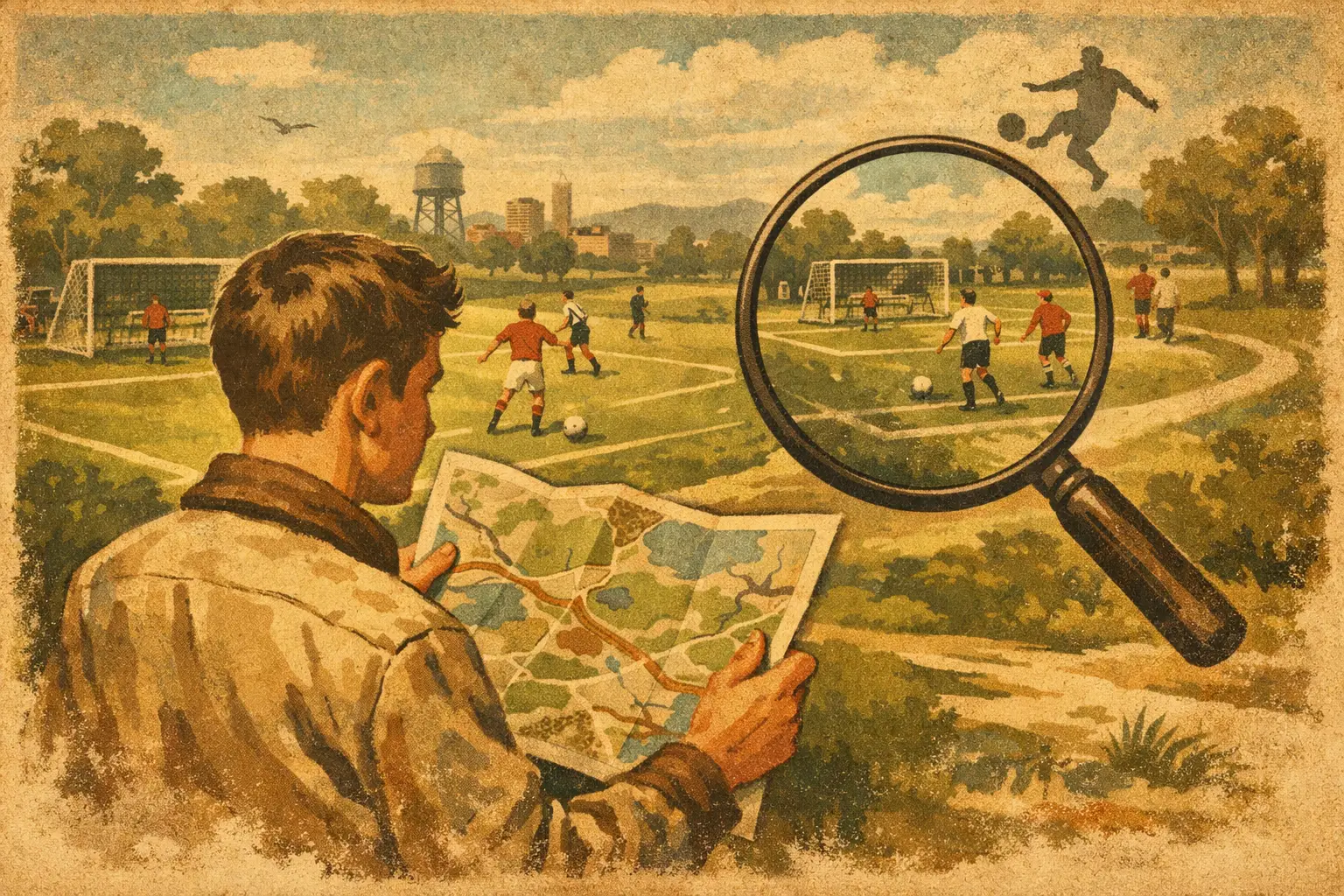
You usually know the feeling before you know the location. You want to play tonight, maybe tomorrow morning at the latest, but the hard part is not the soccer - it’s figuring out where the field is, whether it’s actually open, and if anyone else will be there. If you’ve searched for how to discover public soccer fields near me, you’re not really looking for a map pin. You’re looking for a field that leads to a game.
That distinction matters. A public soccer field can be technically nearby and still be useless for what you need. It might be locked after school hours, overbooked by a rec league, missing goals, or sitting empty in a way that makes pickup impossible. The smarter approach is to search for playable fields, not just listed ones.
Discover public soccer fields near me the smart way
Start with your real use case, not the broadest search. Are you trying to get in solo touches, organize a small-sided pickup run, train with a friend, or find enough activity to meet new players? The answer changes what counts as a good field.
If you just want a ball and some space, a lower-traffic park with open grass may be perfect. If you want a real game, you need signs of repeat activity - marked lines, actual goals, lights, parking, and a pattern of players showing up after work or on weekends. Public does not always mean accessible in the moment.
A lot of players make the mistake of searching once, picking the closest option, and assuming that’s enough. It rarely is. The better move is to build a short list of two or three nearby fields and compare them by timing, setup, and traffic. One field might be better for weekday evenings. Another might be the move for Sunday mornings. A third could be your backup when the main spot is closed or crowded.
What makes a public soccer field worth using?
Distance matters, but reliability matters more. A field that’s ten minutes farther away but consistently open is usually better than the field around the corner that’s blocked by permits every other night.
Surface is the next filter. Natural grass can be great when it’s maintained, but it can also turn uneven, muddy, and slow after bad weather. Turf gives you more predictable footing and often stays playable longer, but some public turf fields are attached to schools or complexes with stricter access rules. If you’re planning regular games, this trade-off matters.
Then there’s infrastructure. Look for lights if you play after work or class. Check for nearby restrooms, water access, parking, and whether goals are permanently installed. These details sound small until they are the reason a game never starts. The best public field is the one that removes excuses.
Field culture matters too. Some parks naturally attract pickup players. Others stay quiet unless someone actively organizes. If your goal is to just show up and join a run, you need a field with visible community habits, not just open space.
Where most people actually find playable fields
Search engines will give you basic location data, but that only gets you halfway there. Municipal parks directories, school grounds policies, and community recreation calendars can help, but they often lag behind reality. A field listed as open may be reserved. A field with no online visibility may be the best local pickup spot.
That’s why the strongest method combines venue discovery with actual player activity. You want to know where the field is, but you also want signals that people use it. Are games being organized there? Do players in your area recognize it? Is it known for futsal-style runs, full-pitch sessions, or casual after-school play?
This is where sports communities beat static directories. A field becomes more valuable when it has context around it - who plays there, when they play, what level usually shows up, and whether newcomers can jump in without awkward guesswork.
How to tell if a field is really public and really available
“Public” is one of those words that sounds simple until you arrive and see a locked gate. Many soccer fields sit on public land but operate with layered rules. They may be open only during park hours, unavailable during school programming, or prioritized for permit holders on certain days.
Before you commit, check for patterns rather than promises. If a field is tied to a school, verify whether community use is allowed after hours. If it’s in a city park, find out whether organized groups need reservations. If lights are available, confirm when they actually turn on. A field that looks perfect at 3 p.m. may be unusable at 7 p.m.
It also helps to visit once without the pressure of needing a game right then. Treat your first trip as scouting. You’ll learn more in ten minutes on-site than from twenty browser tabs.
Discover public soccer fields near me and turn them into games
Finding the field is only part one. Part two is what most players care about more: turning that field into consistent play.
This is where a lot of good intentions die. People say they want to play, but nobody sets the time, posts the location, or creates enough accountability to get bodies on the grass. A public field with no coordination is just a nice patch of land.
The strongest habit is simple. Once you identify a usable field, anchor a recurring session around it. Pick a time people can remember, like Tuesday at 7 p.m. or Saturday at 10 a.m. Keep the format consistent. Maybe it’s 5v5 first-to-three, maybe it’s half-field small-sided, maybe it’s technical work followed by scrimmage. Consistency builds attendance faster than hype.
If you use a platform like Crewters, the advantage is that venue discovery and player coordination live in the same place. Instead of finding a field in one app and chasing players in three others, you can discover venues, create pickup events, challenge friends, and build repeat games around places that are already part of your routine. That’s the bigger play - not just finding somewhere to kick a ball, but helping shape a sports network where fields, players, and competition connect.
What to look for based on your level
Not every public soccer field serves the same kind of player, and that’s a good thing. If you’re new, a huge full-size field with established regulars may feel like a wall instead of an invitation. A smaller park where casual players rotate in and out might be the better starting point.
If you’re more competitive, you’ll probably care less about convenience and more about game quality. You may want fields with lights, better surfaces, and enough local draw to support strong pickup runs or organized teams. In that case, the best field is often the one with a built-in soccer culture, even if it takes longer to reach.
For organizers, the question is different again. You need fields that are easy to explain, easy to access, and easy for first-timers to find. Clear parking, visible entrances, and dependable availability matter more when you’re responsible for getting ten or twenty people to show up.
Common mistakes when searching for fields
The biggest mistake is treating every nearby result as equal. It isn’t. Some fields are practice-friendly but game-hostile. Others are great for matches but terrible for casual drop-ins.
Another mistake is ignoring timing. A field can be perfect on paper and useless at the hour you actually play. Evening access, lighting, noise rules, and permit schedules matter more than a pretty daytime photo.
The third mistake is stopping at discovery. Players often find one field, save it, and never build around it. But the real value comes from repetition. Once a field becomes your crew’s default spot, everything gets easier - attendance, competition, progression, and even that last-minute text that turns into a full game.
The best field is the one that keeps you playing
There’s no universal answer to the best way to discover public soccer fields near me because every city, park system, and player base works a little differently. Sometimes the closest park is the move. Sometimes the better field is the one with lights, goals, and a known pickup crowd twenty minutes away. It depends on whether you want convenience, quality, community, or all three.
What does stay true is this: the right field should reduce friction. It should make it easier to train, easier to organize, and easier to come back next week with more people. When you find that spot, don’t just save the address. Build something around it.
A public field gets more valuable every time someone shows up ready to play, so if you find a good one, claim the moment and bring your crew with you.