
How to Book Pickup Games That Actually Fill
May 30, 2026
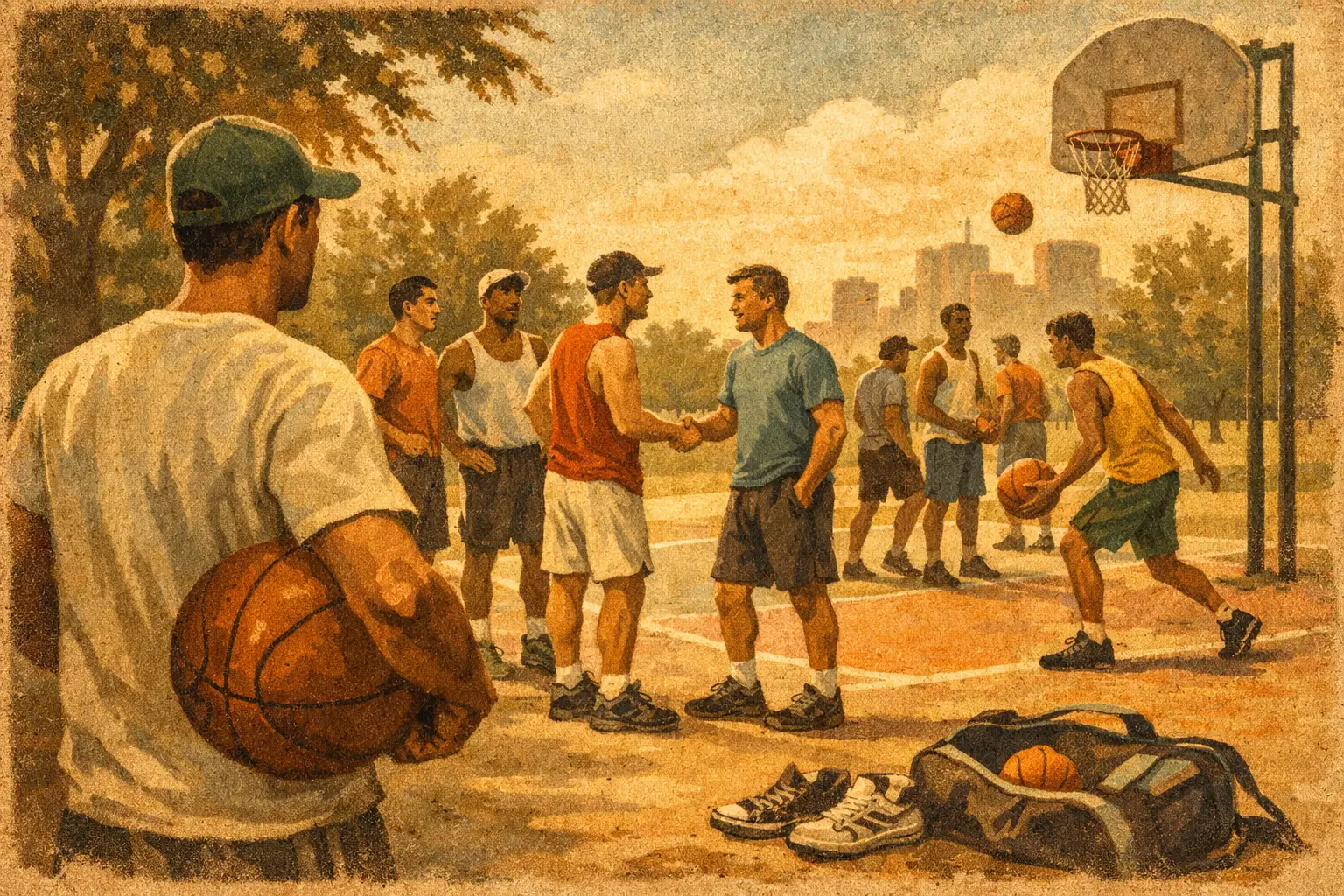
Nothing kills momentum faster than a game chat full of "I'm in" messages that turns into four people standing around at the park. If you want to learn how to book pickup games, the goal is not just posting a time and hoping people show up. The goal is building enough clarity, trust, and convenience that players commit and follow through.
That matters whether you're setting up basketball after work, a soccer run on Saturday morning, a tennis meetup while traveling, or a last-minute volleyball session on campus. Pickup works when the barrier to entry feels low and the plan feels real. The best game organizers understand both.
How to book pickup games without the usual no-shows
Most pickup games fail before they start because the organizer skips one of three things: the right venue, the right invite list, or the right level of structure. People say they want spontaneity, but what they really want is low-friction certainty. They want to know where the game is, who's coming, what level to expect, and whether it's worth carving time out of their day.
So booking pickup games starts with a mindset shift. You're not only reserving a court or claiming a field. You're packaging an experience people can trust.
Start with the sport and format, not the calendar
Before you pick a time, define the run. A full-court 5-on-5 basketball game has different requirements than 3-on-3 half-court. Casual soccer at a turf field attracts a wider range of players than a competitive small-sided match with strict rotations. Doubles tennis needs fewer commitments but more balanced skill matching.
The more specific your format, the easier it is for players to say yes. "Pickup game Friday at 7" is vague. "Indoor 4-on-4 futsal, intermediate level, two subs max, 60 minutes" gives people enough detail to self-select.
This is also where you avoid one of the biggest pickup mistakes: inviting too broad a mix. Open access sounds inclusive, and often it should be, but there is a trade-off. If beginners show up expecting a chill run and find a hyper-competitive group, they probably won't return. If advanced players expect clean reps and the game turns chaotic, they may bail next time too. Good pickup culture starts with accurate expectations.
Choose a venue people will actually commit to
A great court that takes 35 minutes to reach is often worse than a decent one ten minutes away. When you're figuring out how to book pickup games, convenience usually beats perfection. Players are more likely to commit to spots with easy parking, public transit access, decent lighting, and predictable availability.
If you're paying to reserve a venue, be even more selective. A reserved space creates legitimacy, but it also raises the stakes. You need enough reliable players to justify the cost. In some cases, free public courts work better for early-stage community building because the commitment threshold stays lower. In other cases, especially in colder months or for sports that require specific surfaces, paying for indoor space is the difference between a real game and another canceled thread.
The smart move is to match the venue to the maturity of your player group. New group? Keep it simple and accessible. Recurring group with dependable attendance? Upgrade the setting.
Pick a time that fits player behavior
A lot of organizers book around their own schedule and wonder why attendance is spotty. The better approach is to book around the habits of the players you want.
Students may show up late afternoon or late evening. Young professionals often commit more consistently to weekday runs after 6 p.m. or weekend mornings. Parents may prefer tighter windows with clear start and end times. Travelers usually decide closer to game time and need extra flexibility.
You do not need perfect data to make a strong call, but you do need pattern recognition. If a game format is new, start with times that already have social proof in your area. There is a reason recurring runs happen at the same hours every week. Repetition lowers decision fatigue.
And if you want better attendance, stop making every event a one-off. A regular Tuesday basketball run at 7 p.m. becomes part of people's routine. A random mix of days and times forces them to reevaluate every invitation from scratch.
Create commitment before game day
This is where most pickup planning falls apart. Interest is not commitment. A like, a text reaction, or a "maybe" does not mean you have a game.
You need a simple RSVP structure with a visible cap. If the game needs ten players, don't invite fifty and hope for the best. Build a confirmed list, a waitlist, and clear attendance expectations. People are more likely to commit when they see the run is close to full and organized with intention.
It also helps to communicate what players are saying yes to. Include the exact location, start time, expected skill level, format, cost if any, and whether people should bring anything. When details are missing, no-shows rise because attendance feels optional.
A reminder helps too, but timing matters. Send one the night before and another a few hours ahead only if the group is casual or weather is a factor. Too many messages can make a pickup game feel like admin work.
Build around reliable core players
Every strong pickup game has a backbone. It might be four hoopers who always show up, a couple of soccer organizers who each bring friends, or a tennis pair that keeps the rhythm going week after week. Without that core, every game becomes a fresh recruiting challenge.
If you're starting from zero, your first job is not scale. It's consistency. Find a handful of dependable players and build from there. Once people know a game is real, others join more easily.
This is one reason community-led sports platforms work better than random group chats. When players can see recurring events, challenge each other directly, track participation, and build a reputation over time, accountability increases. That social layer matters. People don't just book a game. They join a pattern, a crew, and eventually a local standard.
How to book pickup games for different skill levels
Skill matching is not about gatekeeping. It's about giving players the game they came for.
For beginner-friendly runs, lead with inclusion. Keep rules simple, cap intensity, and say clearly that new players are welcome. For competitive games, be honest about pace and physicality. You'll get fewer signups, but better fit. And better fit usually beats bigger numbers.
If your group has mixed levels, use format to manage it. Shorter games, rotating teams, or splitting into two courts can keep things fun without forcing one bad compromise. The right setup depends on the sport, venue size, and player volume.
There is no single perfect formula here. A basketball run with 12 regulars can handle competitive balance differently than a soccer session with 18 strangers. What matters is that you make the level visible before people arrive.
Plan for the drop-off problem
Even with a solid group, someone will cancel late. Someone will forget. Someone will get stuck at work. That is normal.
The fix is not overbooking recklessly. The fix is smart redundancy. For sports where one or two missing players can ruin the format, keep a short bench or waitlist. For larger runs, build a small attendance buffer. If your ideal soccer game is 14, you may need 16 confirmed to feel safe. If your doubles tennis session needs exactly four, confirmation should be tighter and reminders more direct.
Weather, traffic, and payment also affect drop-off rates. Outdoor games need backup plans. Paid games need upfront clarity. If players are splitting a reservation, say so early. Money surprises lead to last-minute exits.
Make the first five minutes feel organized
This part gets overlooked, but it shapes whether players come back. If the game starts with confusion about teams, rules, or who has next, the event feels looser than people expected.
You don't need to run pickup like a tournament. But you do need a starting point. Know how teams will be formed. Know how long games will run. Know whether winners stay, whether there is a rotation, and what happens if extra players show up.
Structure creates flow. Flow creates retention.
That is especially true if you're trying to grow a recurring community instead of a one-time game. People remember whether the run felt fair, easy, and worth returning to. They also remember whether the organizer actually organized.
Use momentum after the game
The best time to book the next pickup game is right after a good one. People are already bought in, already social, and already thinking about the next run. If you wait three days, energy drops and scheduling friction creeps back in.
This is where a sports network can do more than a scheduling app. If players can rate the run, track stats, issue rematches, or form teams from strong chemistry, one good game turns into a growing loop. That's how communities get built instead of constantly restarted.
If you're using Crewters, that's the upside of building in a space designed for pickup culture across sports, not just one-off event posts. You can find your crew, test what formats work, and help shape what gets built next.
Booking pickup games is part logistics, part social trust, and part repetition. Get the basics right, keep the experience consistent, and your games stop feeling random. They start feeling like something people count on.