
Pickup League Launch Case Study That Actually Scaled
June 10, 2026 · Chris Palmer
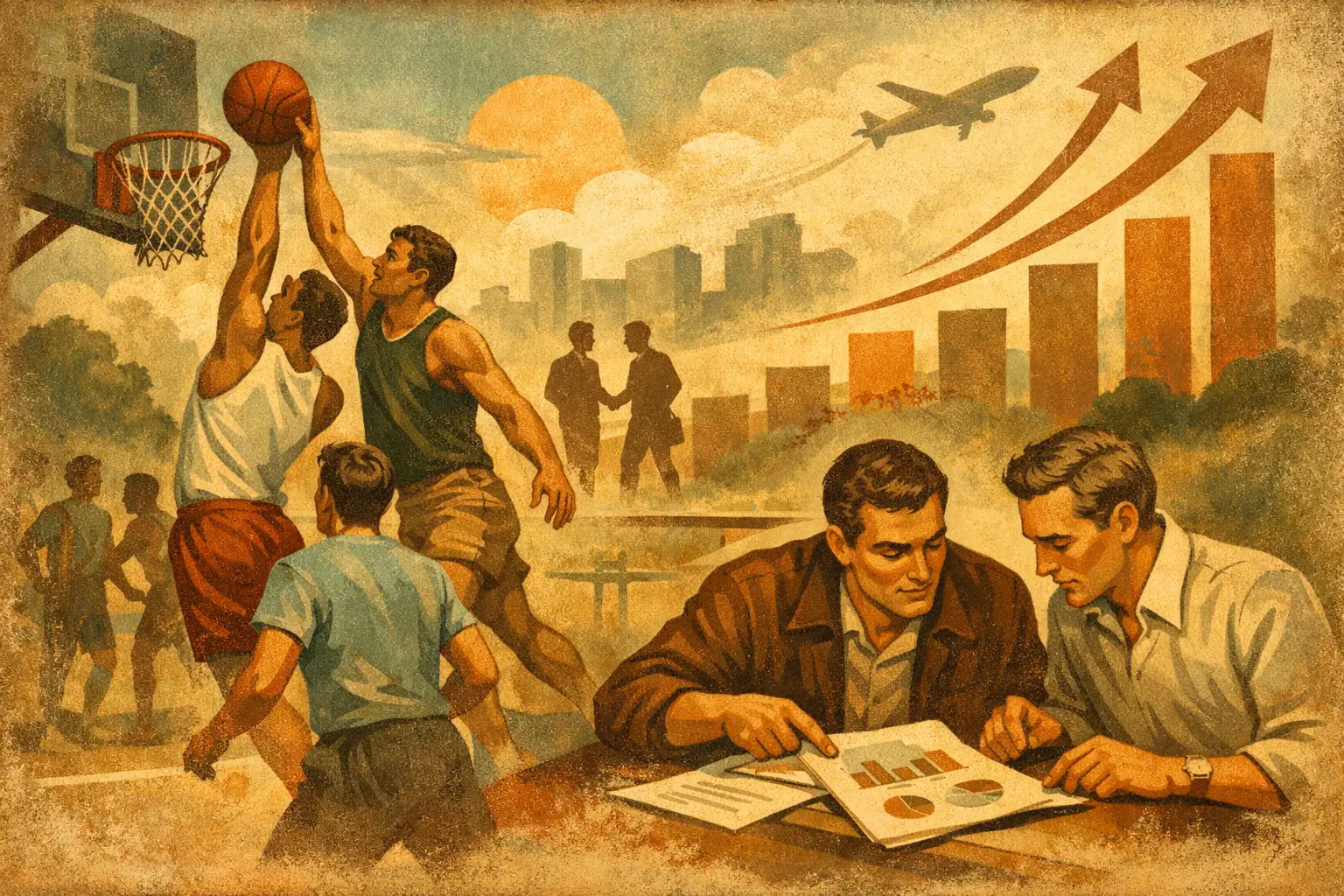
The first week of a new league tells you almost everything. Not because the branding is polished or the signup page looks clean, but because players either come back or they don’t. A strong pickup league launch case study is really a story about behavior - how quickly strangers become regulars, how often casual intent turns into scheduled play, and whether the format creates enough momentum to survive past the first burst of excitement.
That matters if you’re building for modern recreational sports. People want to play, but they don’t want friction. They want a game this week, a rematch next week, stats if available, and a clear sense that showing up means something. If you’re launching a pickup-based league, the real challenge is not awareness. It’s retention disguised as convenience.
What this pickup league launch case study is really measuring
A pickup league sits in an interesting middle ground. It is more structured than an open run, but less rigid than a traditional league with long-term commitments, fixed rosters, and fees that scare off newer players. That middle ground is exactly why the model works - and exactly why launches can fail.
If the format leans too casual, players treat it like a maybe. If it leans too formal, you lose the drop-in energy that makes pickup sports attractive in the first place. The launch phase is where you find that line.
In this case study lens, success is not just total registrations. It is repeat attendance, player-to-player invites, venue consistency, and how fast your local pool starts acting like a real community. A good launch creates habits. A great launch creates identity.
The launch model: start with frequency, not scale
Most first-time organizers think they need a big opening night. They want volume, social buzz, and a packed court or field. That can help, but it can also create a false positive. A crowded first night does not mean the format is working. Sometimes it just means the idea sounded fun once.
A better launch model starts smaller and repeats faster. One venue. One reliable time slot. One sport. One clear format players can understand in seconds. Show up, get placed, play meaningful games, track outcomes, and know when the next session is.
That consistency reduces the mental load. It also gives the community something to build around. For a pickup league, weekly rhythm matters more than launch-night spectacle. Players are not joining a campaign. They’re building a habit.
This is where an iPhone-first sports network has an edge if it keeps the flow simple. Discovery, event creation, player invites, attendance signals, and post-game feedback all need to support one outcome: less talking about playing, more actual games on the calendar.
Why low-friction onboarding wins early
The fastest way to lose a new player is to make them feel like they joined too late, aren’t good enough, or need to understand a bunch of league rules before they can participate. Early launch success comes from reducing social hesitation.
That means the format should welcome solo signups, let organizers balance teams quickly, and avoid insider language. New players need to know they can join without already having a group. Returning players need just enough structure to feel progression.
The trade-off is real. The simpler the system, the less control organizers have over perfect competitive balance. But early on, accessibility usually beats precision. You can tune competitiveness later. You cannot recover the people who bounced because the first experience felt closed off.
The metrics that matter in a pickup league launch case study
Raw signups are the headline number, but they are not the operating truth. The more useful metrics sit one level deeper.
Attendance rate is the first one. If people register but do not show, your value proposition is weak or your reminders are weak. Sometimes both. Repeat attendance is even more important. If players return within two weeks, that is usually your clearest sign the format has legs.
Then there is fill speed. How quickly does a session go from posted to viable? Fast fill tells you the time slot, venue, and audience fit together. Slow fill is not always a failure, but it usually means one variable is off. It could be timing, sport, pricing, neighborhood, or skill-level messaging.
Referral behavior matters too. In strong local sports communities, growth often comes from direct invites, rematches, and group chats that spill into the next game. If players are pulling others in, you are no longer pushing the whole launch alone.
Finally, post-game engagement is a serious signal. Do players rate the session, message each other, track stats, or look for the next event right away? Those behaviors show the experience is becoming part of a routine, not just a one-off social outing.
What usually breaks a launch
Most pickup league launches do not fail because demand is absent. They fail because the system around the demand is messy.
One common issue is inconsistent game quality. If players show up and wait around, if teams feel wildly uneven, or if the format changes every week, trust erodes fast. Recreational athletes will forgive a lot, but they will not forgive wasted time.
Another issue is unclear positioning. Is this competitive? Beginner-friendly? Co-ed? Ranked? Social-first? If the answer keeps shifting, players cannot self-select properly. The result is mismatch, and mismatch kills repeat participation.
Venue dependency is another pressure point. A great format can still stall if access is unreliable, parking is a pain, lighting is weak, or the location feels inconvenient after work. People say they care about community. They do. But convenience still decides whether they show up on a Tuesday night.
There is also a subtle startup mistake here: overbuilding before behavior is proven. Fancy league mechanics, complex scoring systems, and too many progression layers can sound exciting. But if the basic loop is not sticky, those features do not save you. They just add noise.
What a scalable version looks like
The scalable version of a pickup league is not a giant league from day one. It is a repeatable local playbook.
First, the organizer nails one dependable session and learns the local pattern. Which nights convert? What skill mix creates the best games? How many no-shows should be expected? Which reminders actually work? That information is more valuable than a broad launch plan built on guesses.
Next, the experience starts producing its own signals. Regulars emerge. Friendly rivalries form. Players begin to care about standings, ratings, achievements, or trophies because those markers reflect real relationships built through repeat games. At that point, structure adds energy instead of pressure.
This is where platforms built around events, challenges, teams, leagues, stats, and progression can create a stronger flywheel than one-off scheduling tools. The game is not just getting players into a match. It is giving them reasons to come back, improve, and bring their crew with them.
For that reason, the best launch case studies usually look less like event marketing and more like community design. The product supports discovery and coordination, but the real engine is belonging. Players return because they know the run will be there, the competition will be real, and their participation actually counts for something.
The biggest lesson from this pickup league launch case study
The best launches do not start by asking how big the league can be. They start by asking how easy it is for one player to go from interest to action to habit.
That shift changes everything. It affects how you describe the format, how you manage attendance, how you choose venues, and how you decide what to build next. It also keeps you honest. If players are not returning, the answer is rarely more hype. It is usually better flow, better fit, or better follow-up.
For teams building in public, that is actually good news. It means the roadmap should come from real play patterns, not assumptions. Launch the session. Watch what players do. Tighten the loop. Then let the community help shape what comes next.
We’re building toward a sports world where joining a game feels as natural as sending a text, and where pickup can grow into leagues without losing the fun that made people show up in the first place. If you’re serious about launching local play, start with consistency, measure return behavior, and build for the second game - because that’s the one that proves you have a community.