
Live Streaming Amateur Sports Trends in 2026
April 28, 2026
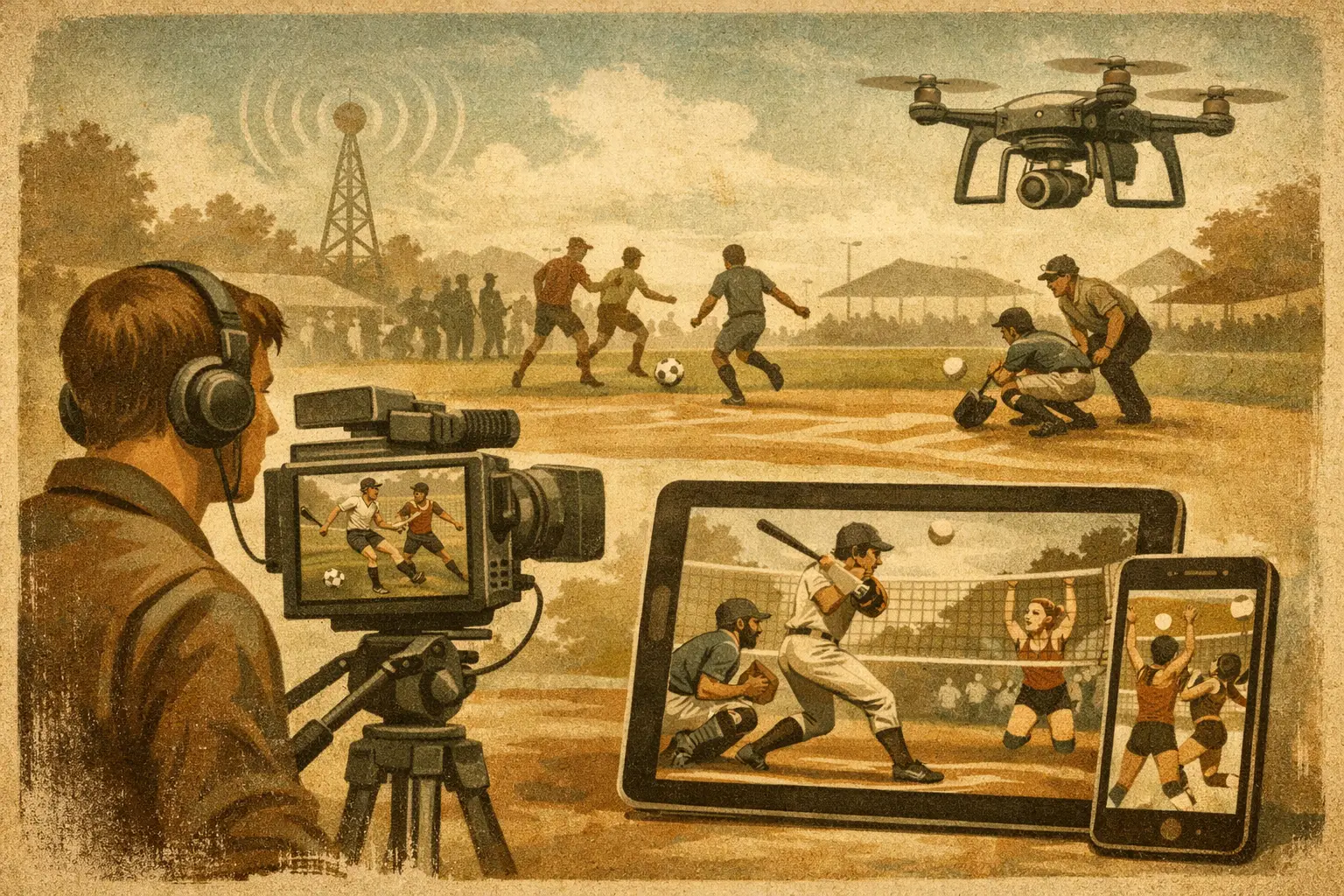
A few years ago, if your Saturday league match or pickup run wasn’t captured by someone on the sideline, it basically disappeared when the final whistle blew. Now the camera is part of the game. Live streaming amateur sports trends are changing how local communities play, compete, remember moments, and even decide where to show up next.
That shift matters because amateur sports have always had the energy. What they lacked was visibility, consistency, and a system that turned participation into momentum. Streaming is starting to fix that. Not in a polished, broadcast-truck way, but in a practical, community-built way that fits how people actually play - at public courts, rec fields, gyms, school facilities, and local clubs.
What live streaming amateur sports trends are really showing us
The biggest trend is not higher production value. It’s lower friction. More games are being streamed because the barrier to entry has collapsed. A phone, a tripod, a stable connection, and a place to share the stream are often enough.
That matters for amateur players because nobody wants a setup that feels harder than organizing the game itself. If streaming adds too much work, people skip it. If it feels lightweight and social, it sticks. That is why the winning products and habits are not built around looking like pro sports. They are built around making local sports easier to join, easier to follow, and more rewarding to come back to.
Another clear signal is that viewers are not just passive anymore. In amateur sports, the audience is often made up of teammates, friends, parents, rivals, organizers, and future opponents. They are watching because they know the people involved or want in on the next game. That creates a different kind of value than traditional sports media. A stream is not only content. It is community infrastructure.
Streaming is becoming a growth loop for local play
For pickup sports and rec leagues, discovery has always been the hard part. People want to play, but they do not know where the action is, how competitive it is, or whether they will fit the vibe. Live video answers those questions faster than a flyer or event description ever could.
A streamed game shows pace, turnout, skill level, energy, and venue quality in real time. That can help a newcomer decide whether to join next week. It can help a player traveling to a new city figure out which run is worth showing up for. It can help organizers build trust before asking people to commit.
This is one of the most useful live streaming amateur sports trends for community-based platforms. Video lowers social risk. That is huge for players who are sports-curious, returning after time off, or trying a new sport without wanting to get thrown into the wrong level.
It also changes retention. Once people see themselves and their crew in the feed, the game feels bigger than a one-off session. There is a record, a shared moment, and a reason to keep showing up. That makes streaming less like a nice extra and more like part of the participation loop.
The most important streams are not always the prettiest ones
There is a temptation to think amateur sports streaming needs professional overlays, multiple camera angles, and polished commentary to matter. Sometimes that helps, especially for tournaments, school competitions, or club showcases. But for most local communities, consistency beats production.
A clear fixed-angle stream of a weekly futsal game can be more valuable than a highly edited one-off event because it builds routine. Players know where to find it. Friends know when to tune in. Organizers can point to it as proof that the game is real, active, and worth joining.
That does not mean quality is irrelevant. Bad audio, unstable framing, and unreliable start times can still kill engagement. But the trade-off is real. Most amateur communities should prioritize dependable streaming over expensive streaming. The best setup is often the one people will actually use every week.
Highlights, clips, and receipts are becoming part of player identity
One major shift inside live streaming amateur sports trends is that the full stream is only the starting point. What spreads is the clip.
A clean assist, a game-winner, a long rally, a ridiculous save - these moments travel. They give players social proof and give communities a way to celebrate their own culture. For a lot of amateur athletes, especially younger ones, the value is not just being watched live. It is having moments they can revisit, share, debate, and build on.
That affects behavior on the court and field. People compete harder when there is a record. They also improve faster when they can review what happened. Video becomes part highlight reel, part accountability tool. A player who says they lock down on defense can now back it up. A team trying to improve shape or spacing can actually watch the tape.
There is some tension here, though. More visibility can make games more exciting, but it can also make them more performative. Some players tighten up on camera. Others start chasing clips over smart play. Communities need to set their own norms. The goal should be better competition and stronger connection, not turning every run into a content farm.
Rewards and recognition are moving closer to the stream
This is where the space gets interesting. Streaming is no longer just about broadcasting. It is becoming tied to participation, reputation, and incentives.
When players can earn recognition, ratings, rewards, or progress through showing up and streaming events, the stream becomes part of the sports economy at the community level. That is a meaningful upgrade from the old model where amateur content mostly benefited platforms but not the people creating the games.
For apps built around local sports activity, this opens a smarter loop. Stream the event. Capture the stats. Rate the competition. Reward participation. Then use that data to help players find better matchups, stronger teammates, and more relevant leagues.
That approach fits where the market is heading. People do not just want passive sports social feeds. They want systems that turn effort into visible progress. If someone organizes a weekly basketball run, competes in local tennis matches, and brings new people into the fold, the platform should reflect that work.
Crewters is one example of where this model feels directionally right - not because streaming alone is special, but because it connects live events, player progression, community discovery, and rewards in one place.
Niche sports are finally getting a fairer shot
One of the most underrated live streaming amateur sports trends is what it does for sports outside the usual spotlight. Basketball and soccer will always attract attention, but local streaming helps volleyball, pickleball, futsal, handball, table tennis, lacrosse, and dozens of other communities stay visible year-round.
That visibility matters because niche sports often suffer from fragmentation. Players are out there, but they are harder to find. A live stream can function like a beacon. It shows that a scene exists, that people are active, and that newcomers are welcome.
For all-sports platforms, this is a major advantage. When different communities live in one network instead of being split across disconnected apps and group chats, streaming can pull discovery across sports. Someone might join for one game and end up exploring three more.
The next phase is less about content and more about coordination
A lot of people still think streaming is mainly a media feature. In amateur sports, it is becoming an organizing feature.
The most useful product direction is not just “watch this game live.” It is “watch this game, join the next one, challenge that team, follow this venue, track your stats, and build your crew.” That is how streaming stops being novelty and starts becoming infrastructure.
This is also where startup thinking matters. The best tools in this space will not come from pretending amateur sports are miniature pro leagues. They will come from building with actual players, organizers, and venues who know where friction lives. Camera placement, event reminders, clip creation, score input, post-game ratings, rewards - all of it works better when the community shapes what gets built next.
The takeaway is simple. Live streaming is not making amateur sports more real. These communities were already real. What streaming is doing is making them easier to find, easier to trust, and harder to ignore.
If you care about local sports, this is the moment to pay attention. The future is not reserved for elite athletes or big venues. It is showing up at the park, the gym, the neighborhood field, and the rec center - one stream, one game, one crew at a time.